
This report was uploaded August 2002 and re-reading it now in 2021, it is not really obsolete,
only that most of the populations called "variations" back then have been given names in the meantime.
The living species of the Genus Umbilia
| The species of Umbilia are among the more striking cowries, mainly because of their large spires, the rostrate extremities and variable, often bright colors. The fossil record is characterized by a variety of odd species. Umbilia (Palliocypraea) gastroplax had wide fragile flanges along the margins, Umbilia siphonata had long, twisted beaklike extremities not seen in any living species of Cowries. The living species form a complex of debated taxa with wide distributions along the southern half of Australia. |
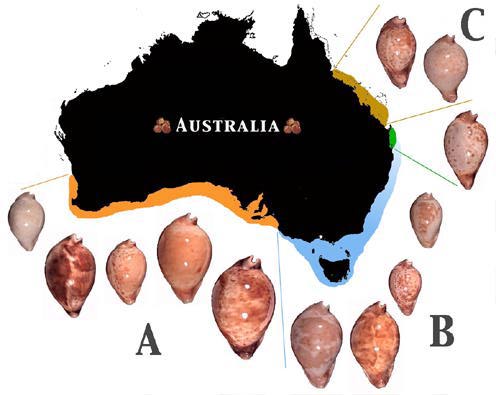
| Basically, three geographical sectors split the Umbilia. Sector A is inhabited by Umbilia armeniaca, which has been found in the Perth-area, at Esperance, the Great Australian Bight and finally from the Adelaide area. The species is found from 20 to 150 m depth. Sector B is inhabited by hesitata, a species that differs from armeniaca mainly by a longer anterior extremity, a less curved aperture and stronger, slightly extending columellar teeth. Shells of U. hesitata do not have a high gloss but a fine microstructure composed of tiny tubercles and diples that give the shell a dull appearance. However, completely smooth, glossy hesitata can be found in the northern part of the species' distribution. Finally, sector C is inhabited by two species, Umbilia capricornica, which is well known in the cowry-community, and U. petilirostris about which very little has so far been published. These both have a well developed fossula and long columellar teeth. In the following, I will demonstrate the conchological variability of the living Umbilia along the Australian coast, from west to northeast. The size-, depth- and distribution- ranges are approximate. |
 |
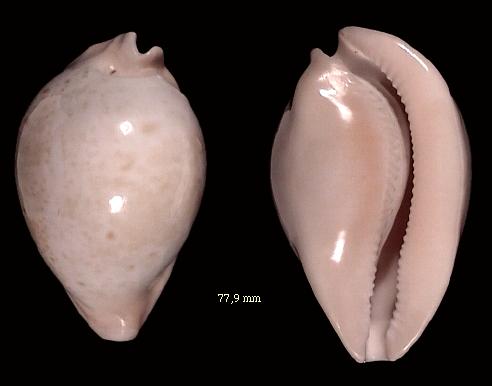 |
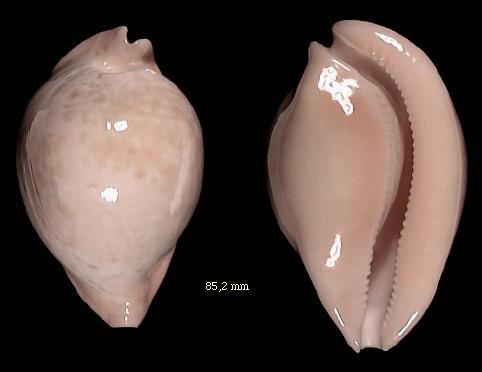
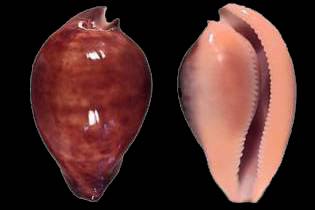
| 1.1. armeniaca Western variety; Size range: 75-85
mm. Depth: 150-280 m. Pale to rish apricot and purple, heavy shelled, small. Very rare.
Perth area, SW Australia. (= armeniaca andreyi Lorenz & Beals 2013) |
|
 |
 |
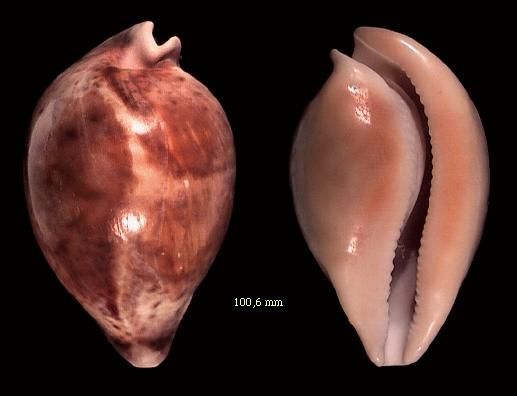
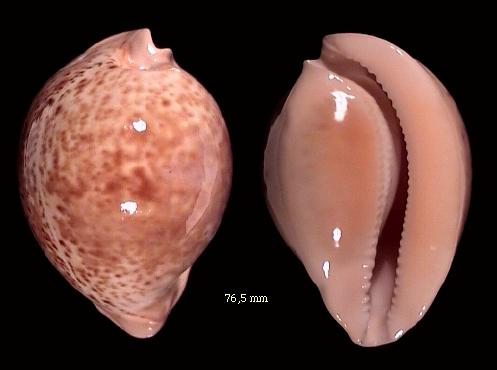
| 1.2. armeniaca Esperance variety; Size range: 90-100 mm. Depth: 20-60 m. Dark mottled. Rather light weight, elongate. Extremely rare. Esperance, SW Australia. (= armeniaca clarksoni Lorenz & Beals 2013) | |
 |
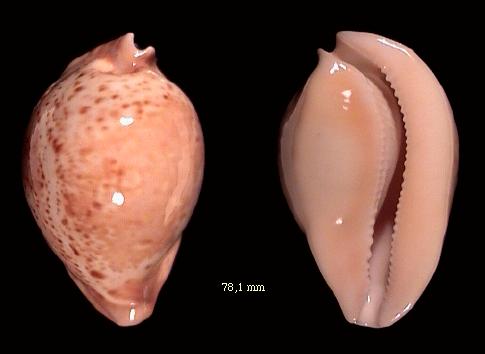 |
| 1.3. armeniaca typical; Size range: 65-100 mm. Depth: 90-150 m. Apricot, with contrasting brown spotting. Inflated, rather heavy. Uncommon. Cape Recherche to Eucla-area. | |
 |
 |
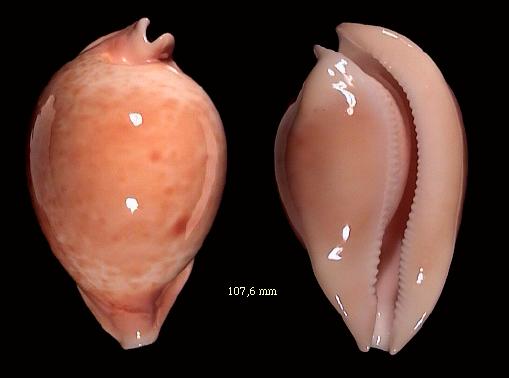 |
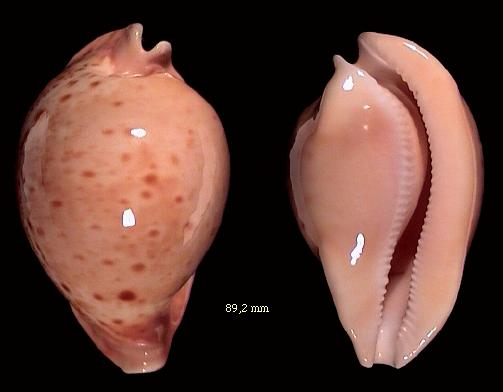
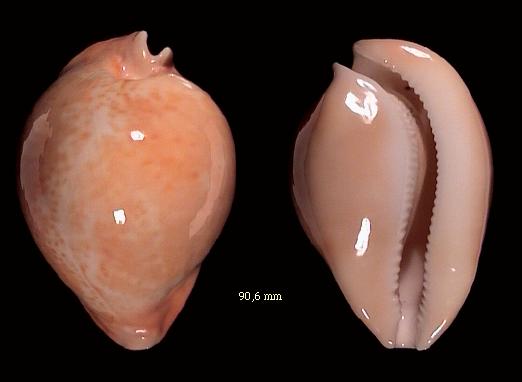
| 1.4. armeniaca variation; Size range: 75-120 mm. Depth: 90-150 m. Pale, heavy shelled, elongate. Moderately common. Great Australian Bight to Port Lincoln area. | ||
 |
 |
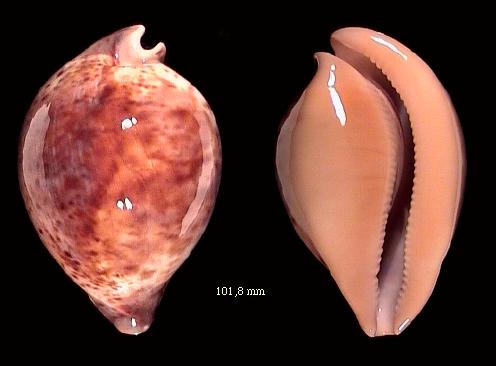 |
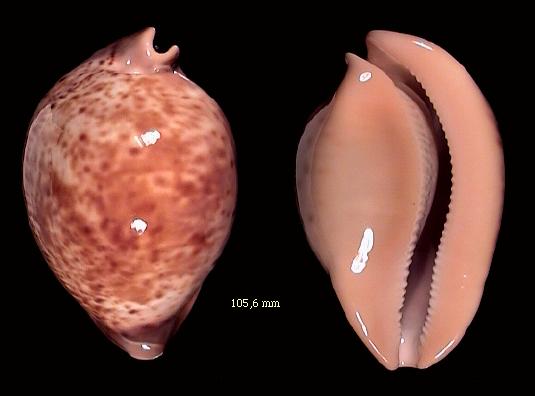
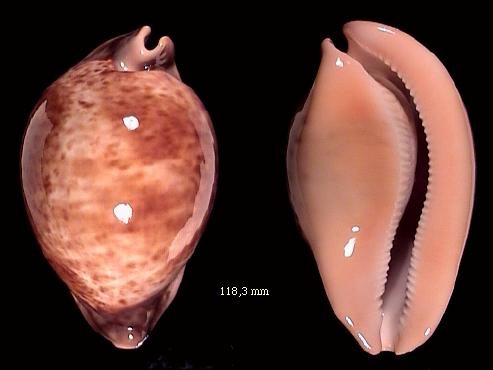
| 1.5. armeniaca var. brunnea; Size range: 95-120 mm. Depth: 20-50 m. Dark mottled, very heavy, rostrate. Rare. Adelaide area. (= armeniaca diprotodon Lorenz & Beals 2013) | ||
 |
 |
 |
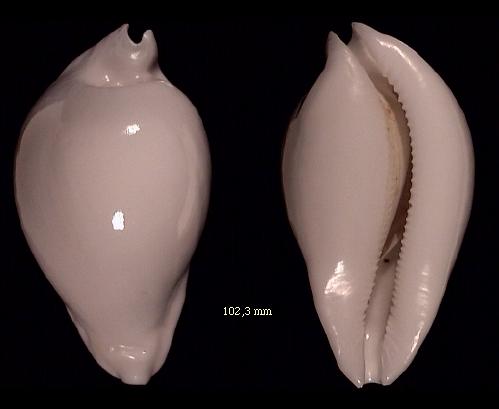 |
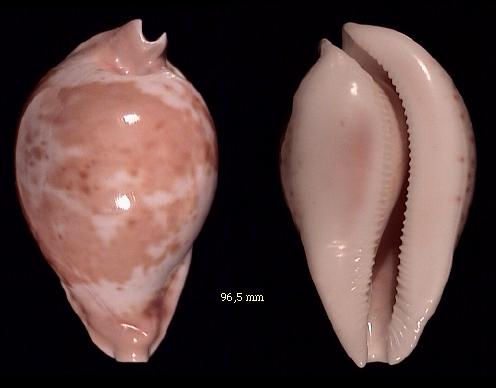
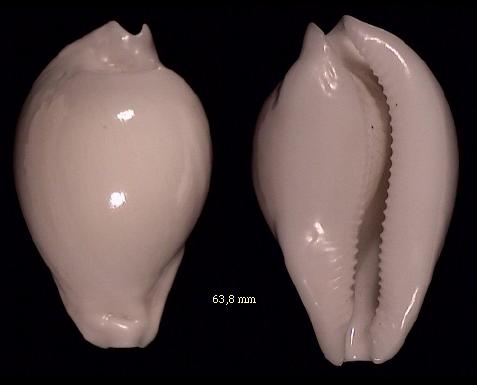
| 2.1. hesitata hesitata typical; Size range: 75-130
mm. Depth: 50-150 m. Blotched and spotted with pale brown, to
all-white (var. howelli). Slender, heavy, rostrate. Often with
a dull surface. Common. Cape Jaffa to Cape Howe. Heavy shells from the <portland area have been named hesitata suprastrata Govaert, Deprez & Vandenberghe 2015) |
|||
 |
 |
 |
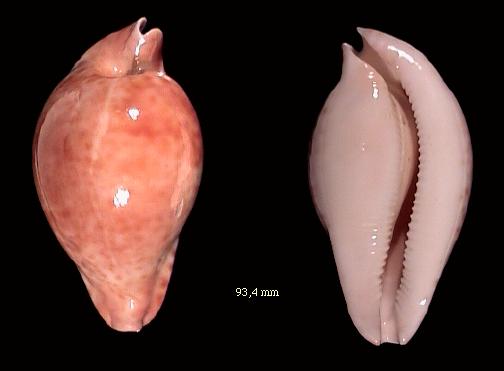 |
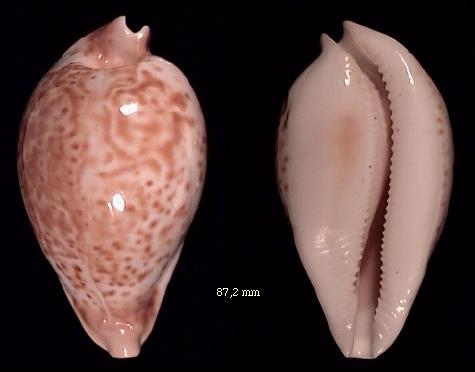
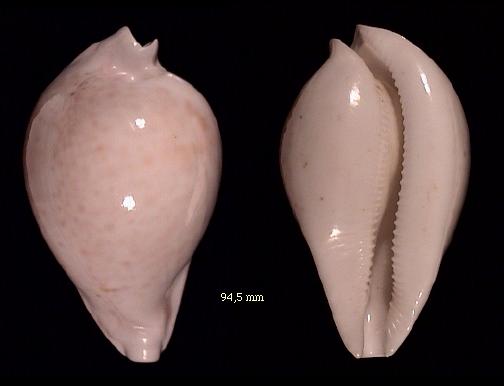
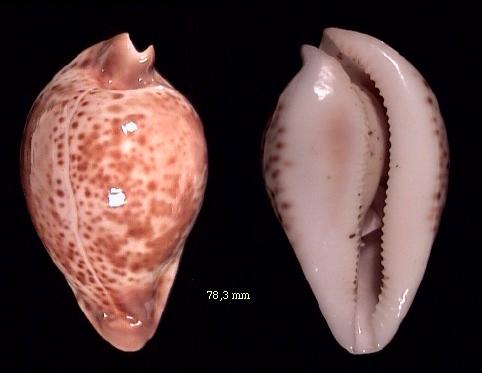
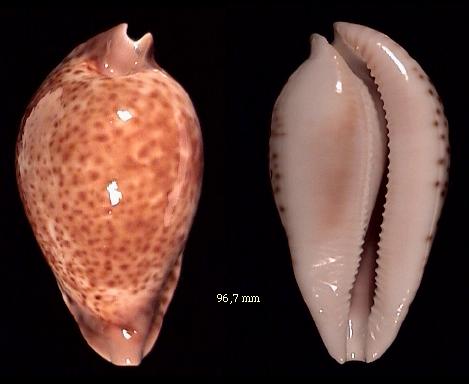
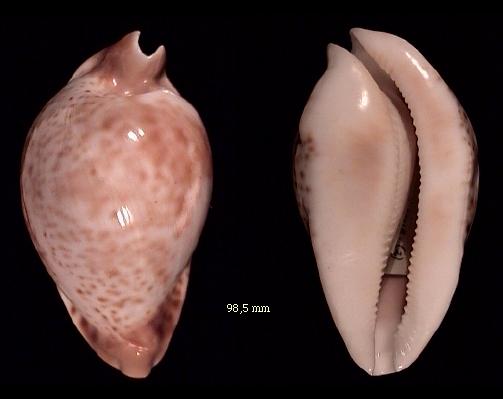
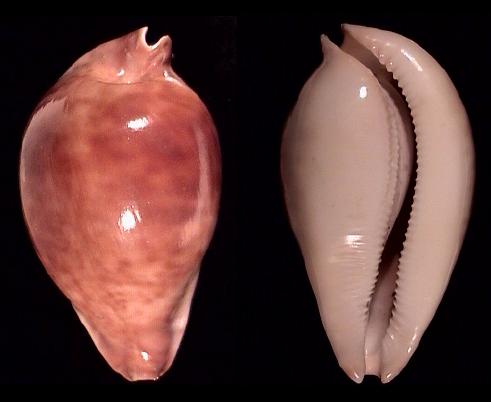
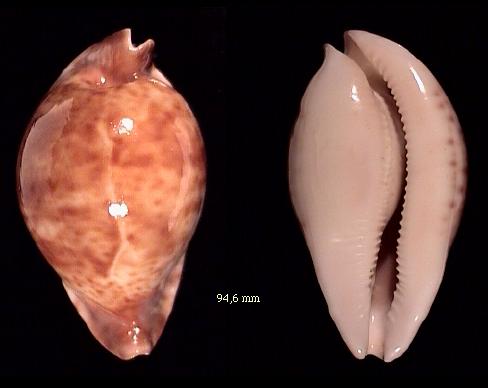
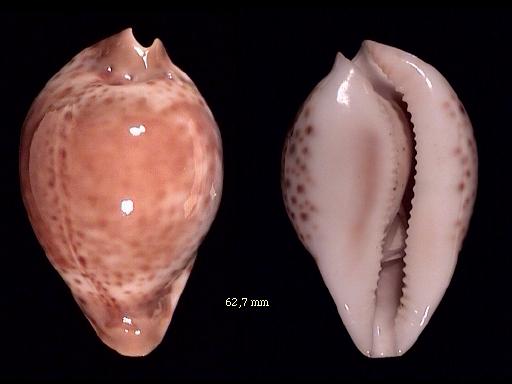
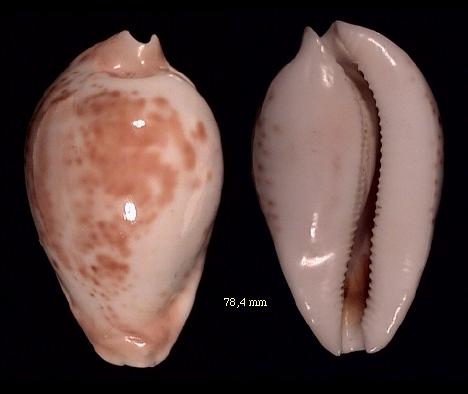
| 2.1. hesitata hesitata - color varieties; Throughout its distribution, this species can have very different color patterns. Apart from the albinistic forms (howelli, see 2.1.) there are fancy ornamented (left), darker brown or grey mottled shells, as well as the sought-after apricot forms which may also be strongly rostrated (right). | |||
 |
 |
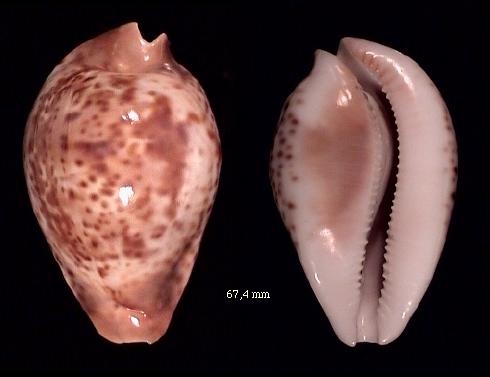
| 2.2. hesitata hesitata Tasmanian form; Size range: 85-100 mm. Depth: Intertidally to 150 m. Densely mottled or coated with brown. Slender, heavy, rostrate. Mostly with a dull surface. Uncommon. Around Tasmania. | |
 |
 |
 |
 |
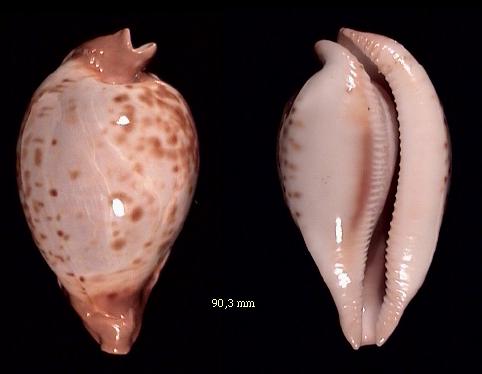
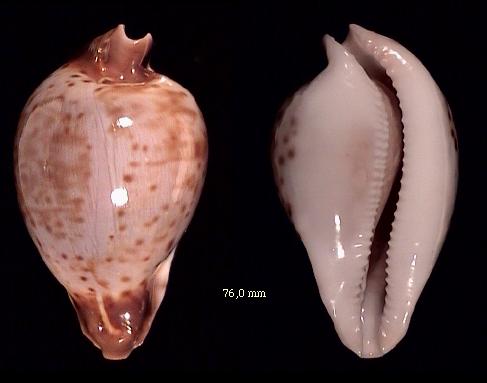
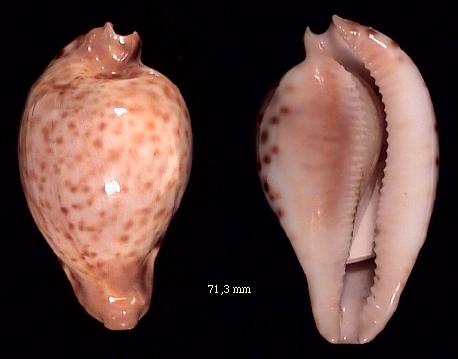
| 2.3. hesitata beddomei; Size range: 45-80 mm. Depth: 20-150 m. Mottled or spotted, rarely albinistic. Shorter, heavy, less rostrate. Mostly with a dull surface. Uncommon. New South Wales northwards to Brisbane area. | |||
 |
 |
 |
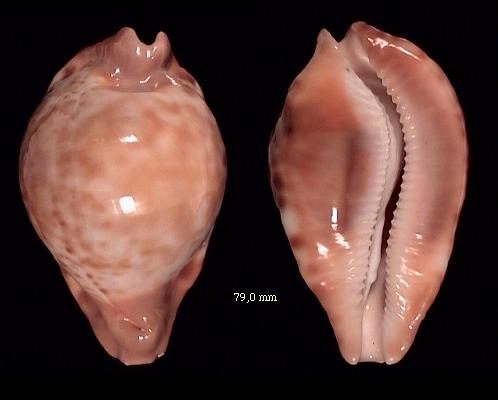
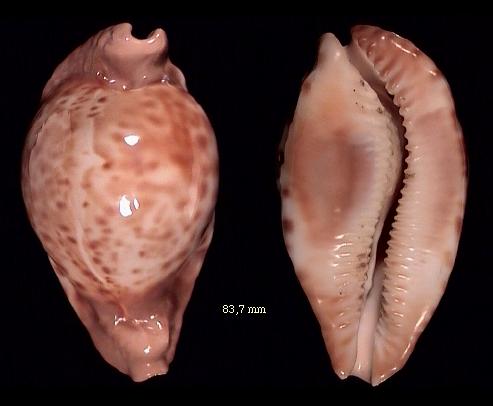
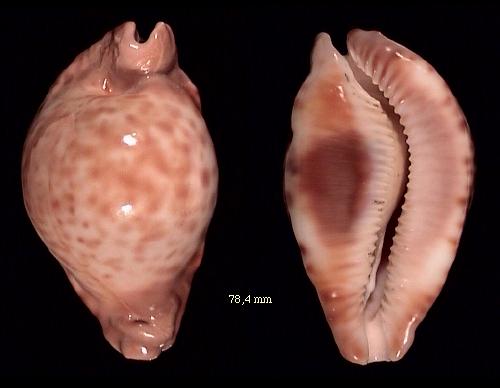
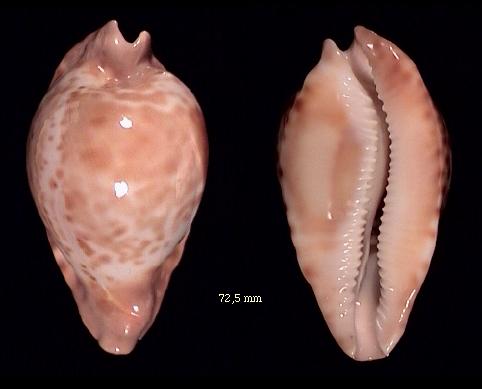
| 2.4. oriettae; Size range: 75-100 mm. Depth: 50-100 m. Sparsely spotted with brown, bluish ground color. Extremities distinctly darker. Slender, light weight, very rostrate and distinctly curved. Shiny surface. The presence of a shallow fossula makes this species take a conchologically and geographically intermediate between hesitata and capricornica. Rare. Around Moreton Bay. | ||
 |
 |
 |
 |
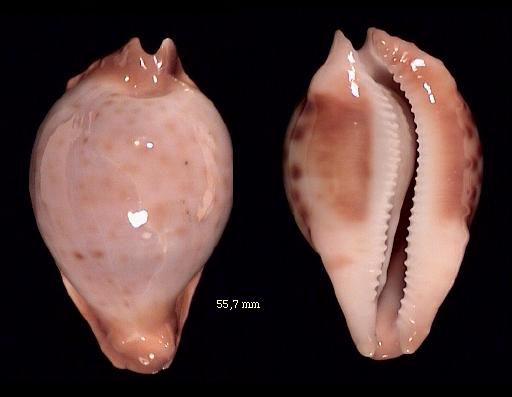
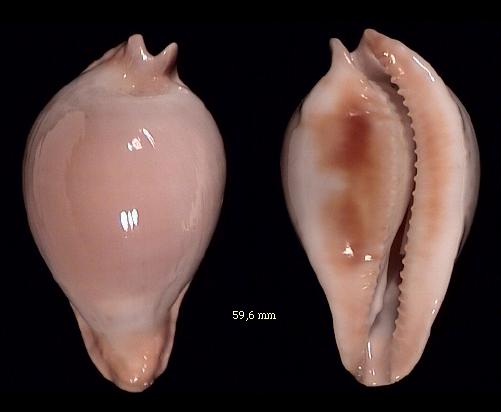
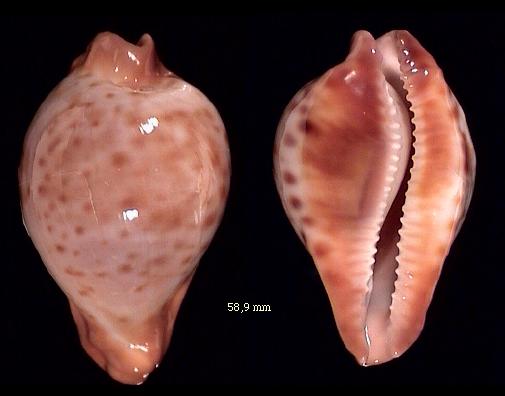
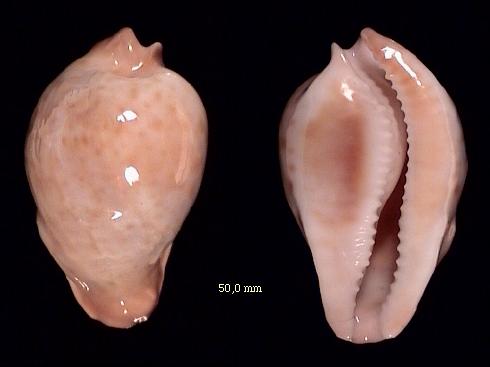
| 3.1. capricornica typical; Size range: 65-80 mm. Depth: 80-110 m. Densely mottled with brown. Rather broad, very heavy, rostrate. Base mostly brownish. Well delevoped fossula. Strong distinct columellar teeth. Surface very slightly dull. Common. Swains Reef, Capricorn Channel. | |||
 |
 |
 |
 |
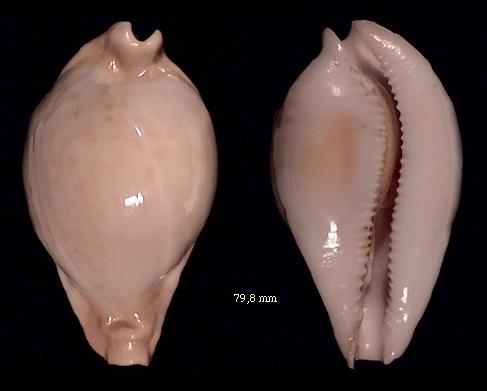
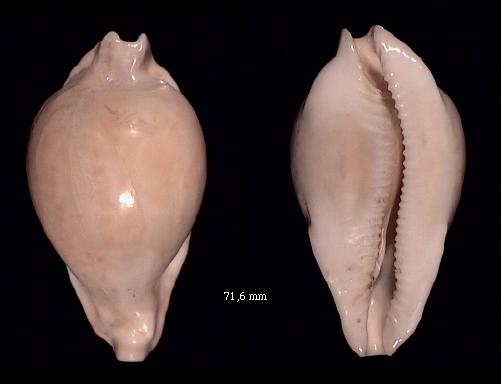
| 3.2. capricornica Frog Reef variety; Size range: 50-65 mm. Depth: 140-160 m. Sparsely mottled with brown. Rather inflated, thin-shelled, slightly rostrate. Base mostly brownish. Well delevoped fossula. Distant, indistinct columellar teeth. Surface shiny. Unommon. N.E. Swains Reef between Frog Reef and East Cay. An interesting local variety from deeper water. | |||
 |
 |
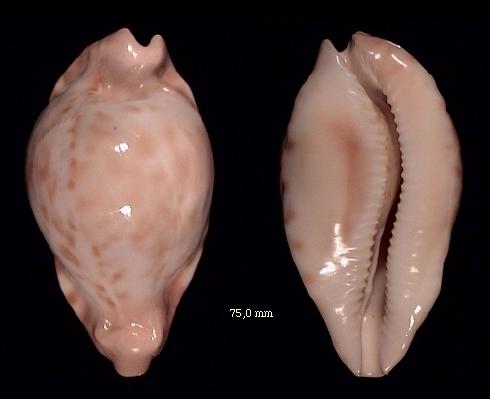 |
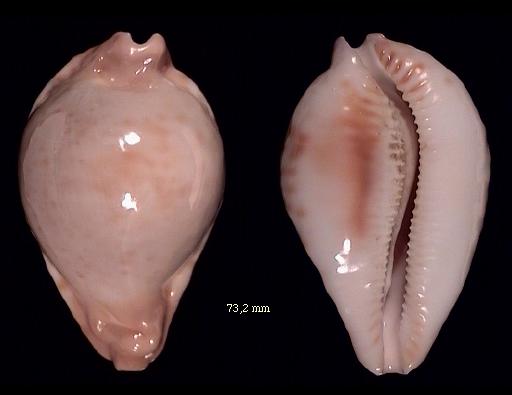
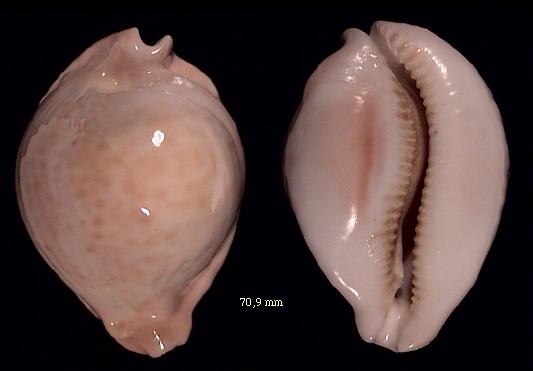
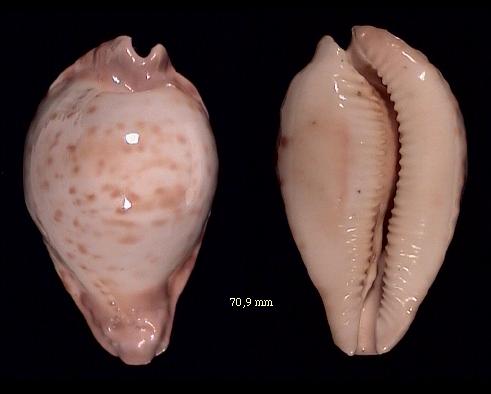
| 3.3. capricornica rostrate variety; Size range: 65-80 mm. Depth: 80-150 m. Sparsely mottled with brown, sometimes albinistic. Very slender, heavy, very rostrate. Base mostly pale. Well delevoped fossula. Strong distinct columellar teeth. Surface very slightly dull. Uncommon. Capricorn Channel. | ||
 |
 |
 |
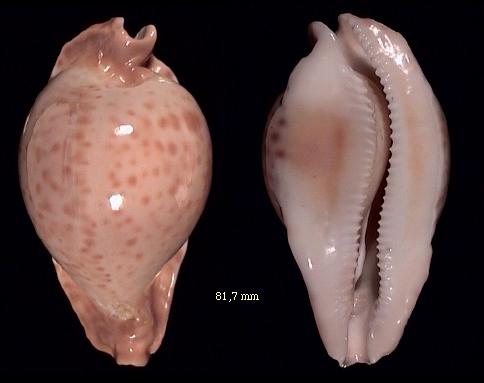
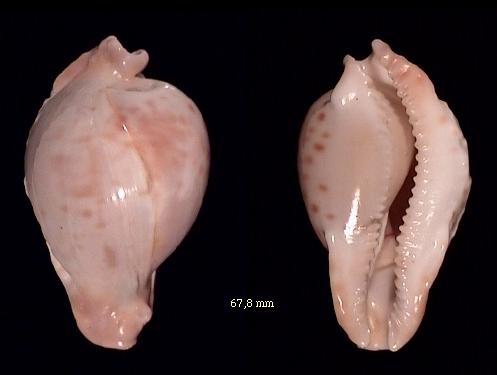
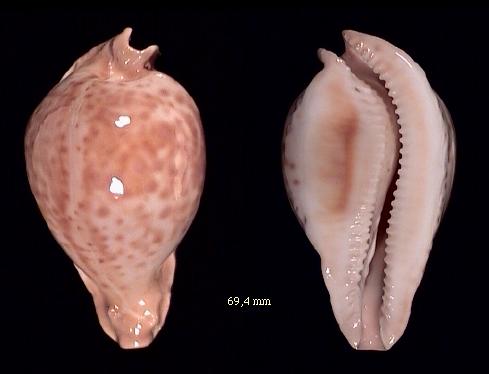
| 3.4. capricornica northern variety; Size range: 55-85 mm. Depth: 80-150 m. Sparsely mottled with darker. Rather broad, very heavy, less rostrate. Slightly thickened labral margin. Base mostly pale. Well delevoped fossula. Strong distinct columellar teeth. Surface very slightly dull. Common. Townsville area. (= capricornica thorni Daughenbaugh & Beals 2013) | ||
 |
 |
 |
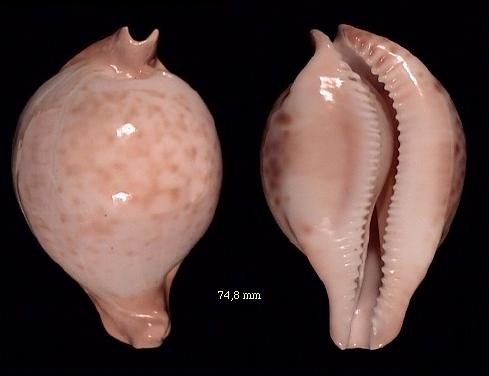
| 3.5. capricornica flanged variety; Size range: 65-85 mm. Depth: 110-180 m. Densely mottled with brown. Inflated, with extremely rostrate, thin-walled extremities. Margins pustulate, forming flanges at extremities. Base mostly brownish. Well delevoped fossula. Indistinct mid-columellar teeth. Surface mostly shiny. Rare. Hixson Cay, Swains Reef. | ||
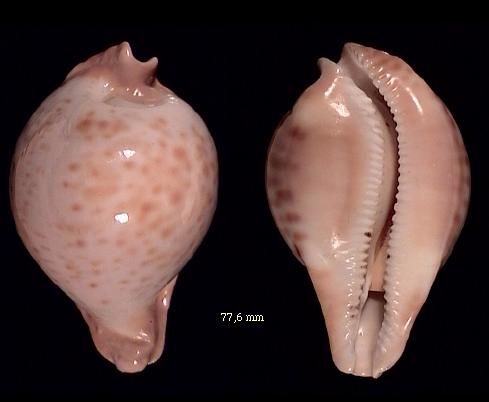
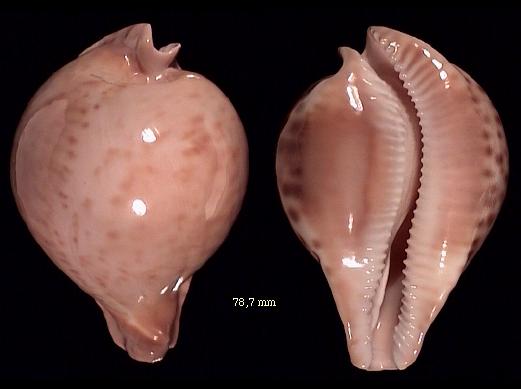
| In "A REVISION OF THE AUSTRALIAN GENUS UMBILIA (GASTROPODA: CYPRAEIDAE)" Memoirs of the Museum of Victoria 59(2): 355392 (2002) T. Darragh described Umbilia petilirostris as a new species from Queensland. He separated it from capricornica as follows: This species has been confused with Umbilia (U.) capricornica Lorenz, but differs by its more globose shape, more weakly developed posterior rostrum, and by having the columellar side of the posterior rostrum developed as a thin wall. |
 |
 |
 |
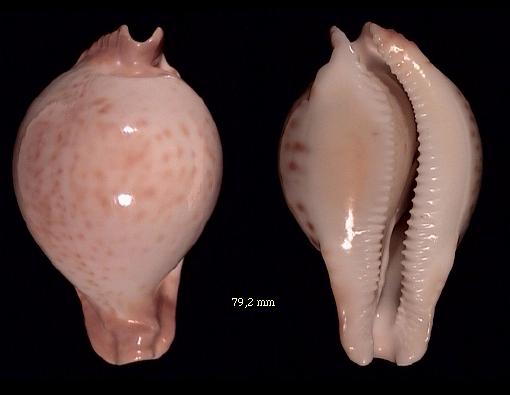 |
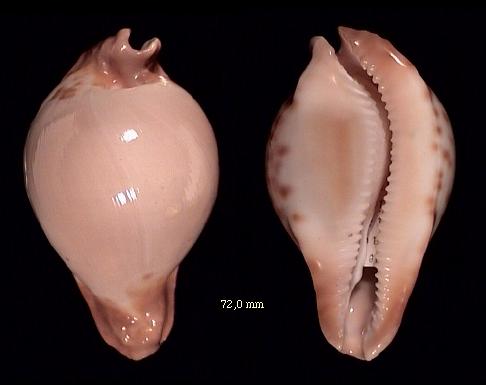
| 4.1. petilirostris typical; Size range: 80-90mm. Depth: 90-120 m. Sparsely but distinctly spotted with greyish-brown. Base mostly brownish. Well delevoped fossula. Distinct, numerous and long teeth. Greatly inflated, with thin-walled, rostrate and often tuberculate extremities. Surface very slightly dull. Aperture strongly curved. Rare. Capricorn Channel. | |||
 |
 |
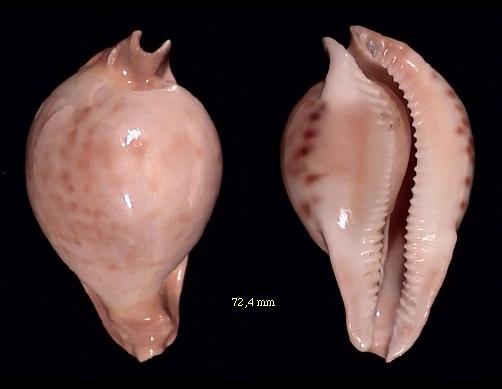
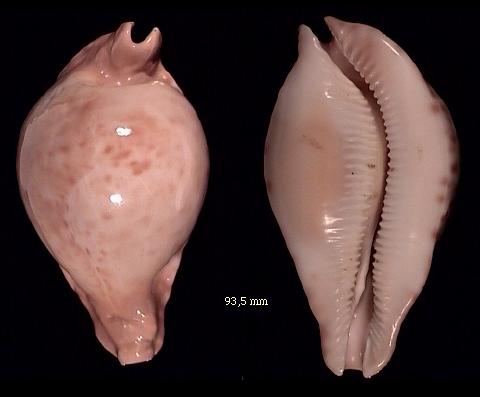
| 4.2. petilirostris small variety; Size range: 70-75mm. Depth: 80-120 m. Sparsely but distinctly spotted with greyish-brown. Base faintly brownish. Well delevoped fossula. Indistinct mid-columellar teeth, numerous but short teeth. Greatly inflated, with thin-walled, rostrate and often tuberculate extremities. Approaches certain capricornica-variations conchologically. Rare. Capricorn Channel. | |
 |
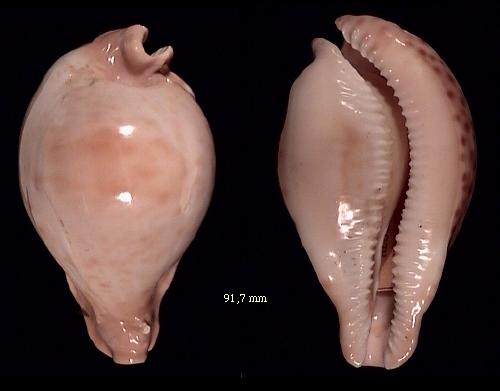 |
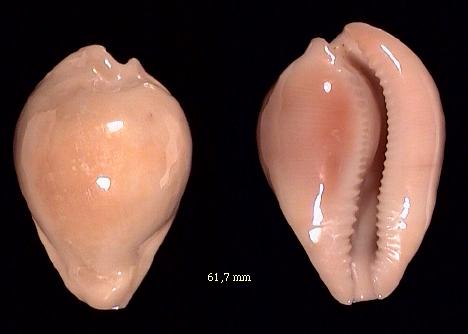
| 4.3. petilirostris giant form; Size range: 90-100 mm. Depth: 90-110 m. Sparsely spotted with greyish-brown. Base mostly pale. Well delevoped fossula. Distinct, numerous and very long teeth. Less inflated, with thicker, very rostrate and often tuberculate extremities. Surface very slightly dull. Rare. Capricorn Channel. | |
 |
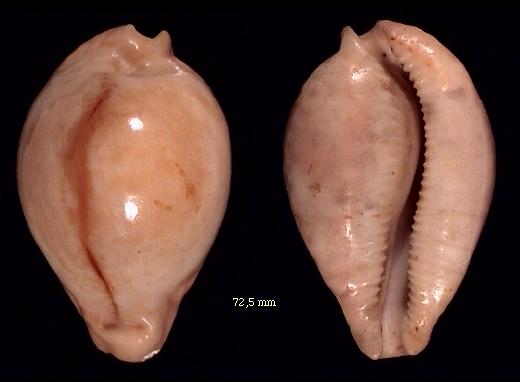 |
| 5. Umbilia species. Two dead specimens of this so far undescribed species were trawled from unknown depth in northern Queensland. The extremities are short and heavily callused. The shell is broad and rather depressed. The fossula is absent. The teeth are coarse on columellar side, becoming weaker midways. The labral teeth are fin, short and numerous. The margins are tuberculate, very weak tubercles continue towards the dorsum. The absence of a fossula, as well as the features of shape and dentition suggest that these two shells belong to a different, so far undescribed species. May be this page will draw more attention to it and lead to the discovery of further specimens that might be hiding in collections. | |