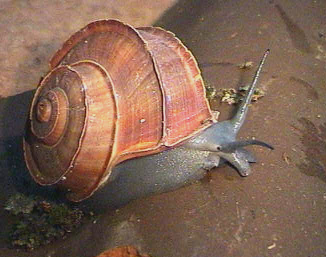
Tropidophora cuveriana PETIT 1841
Mollusca: Gastropoda: Prosobranchia, Superfamily Littorinoidea, Family Pomatiasidae
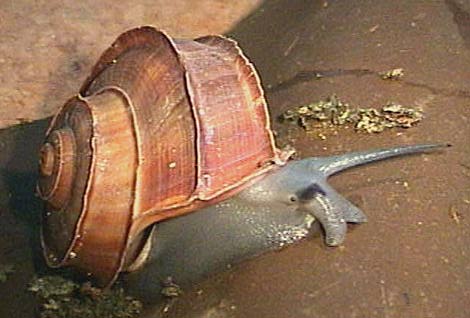
A characteristic feature of the Prosobranchia is the
eyes being situated at the base of the tentacles, and it has a large,
horny operculum.
This can be observed in most marine snails while in the group of the
terrestrial Pulmonate snails the eyes are usually situated on the tip
of the tentacles.
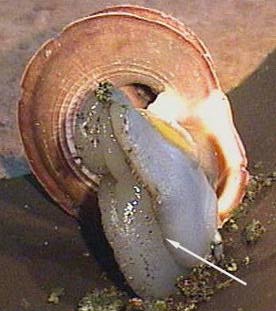
As in all Pomatiasids the foot is split in two parts by a longitudinal groove. The snail moves by alternately moving the lobes of the foot, causing the impression that the snail is "walking".
Tropidophora cuveriana is night active but not
actually shy when exposed to light. We hope to keep these beautiful
animals alive and perhaps toget them breed.
The study of the anatomy of these large Tropidophoras promises a lot of insight on evolutionary aspects of the family.
Physiological studies on how the extraordinary food is being digested
and which substitute food could be given might aid to find ways of how
to preserve this species from extinction.