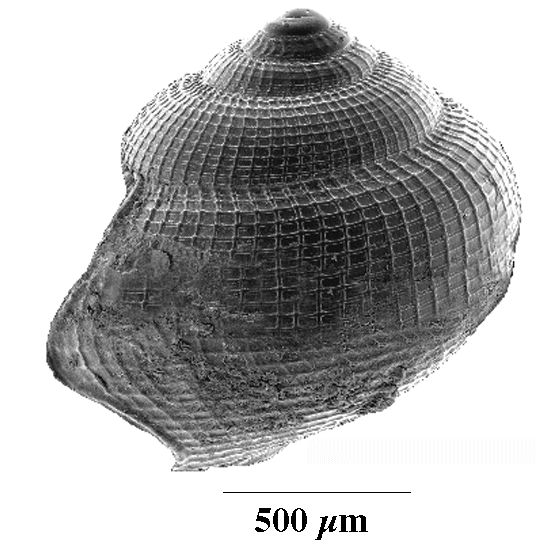
Does the protoconch give a clue to higher level relationships?
This was uploaded 2001. The molecular studies of Dr. Christopher Meyer (2003, 2004) answered the question.
Intracapsular ("Direct") development
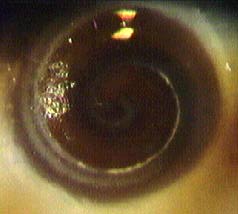 Cypraeovula alfredensis: the paucispiral protoconch of an intracapsular developer |
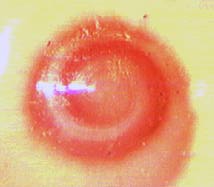 Cypraeovula algoensis algoensis |
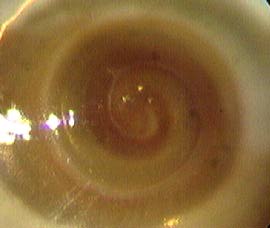 Cypraeovula edentula edentula: smooth, paucispiral protoconch |
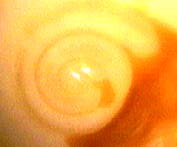 Zoila decipiens |
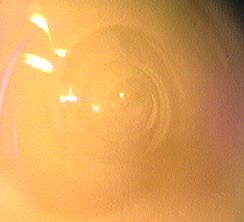 Zoila mariellae |
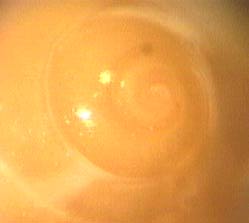 Zoila perlae perlae: All Zoila have very similar protoconchs. |
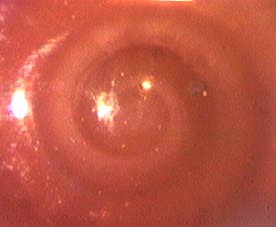 Austrocypraea reevei: The same type of protoconch in another intracapsular developer from Australia |
Planktonic Developement
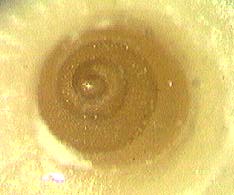 Nesiocypraea teramachii |
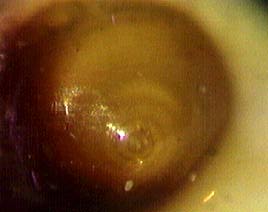 Nesiocypraea midwayensis: The two ancestral species from deep water have a plurispiral protoconch with more than six coils, implying a long planctonic stage. |
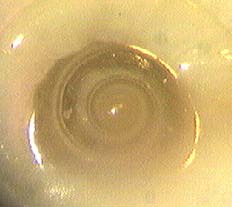 Erronea chinensis amiges: In the derived Erroneinae the protoconch has fewer whorls. |
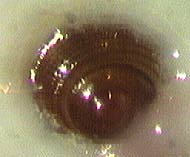 Purpuradusta minoridens |
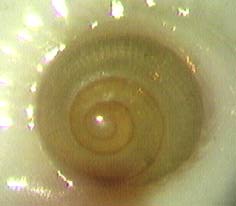 Purpuradusta fimbriata unifasciata: In the smaller groups the protoconch shows less whorls, with a characteristic cancellate microstructure |
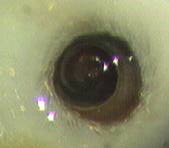 Bistolida kieneri depriesteri |
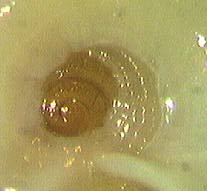 Ransoniella punctata berinii: The duration of the planctonic stage seems to be rather short, as the protoconch has fewer whorls. |
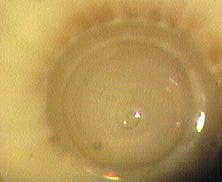 Naria erosa |
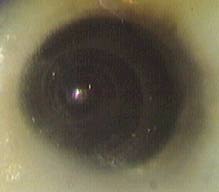 Naria helvola argella |
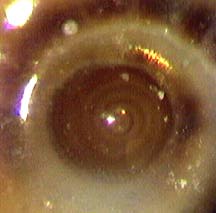 Monetaria caputserpentis |
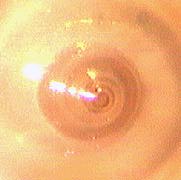 Perisserosa guttata azumai |
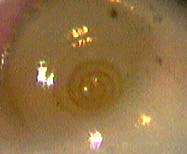 Naria bernardi: All species of Naria have a similar type of protoconch, which is faintly sculptured with longitudinal and transverse ridges of equal strength. |
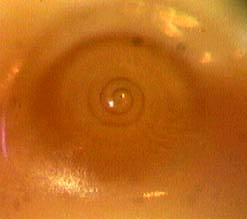 Propustularia surinamensis |
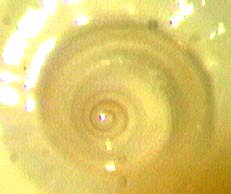 Nucleolaria nucleus: The protoconchs of Nucleolaria and Propustularia are similar to those of Naria, suggesting close relationship. |
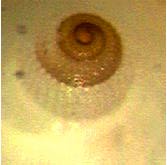 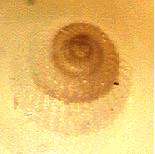 Ipsa childreni has a longitudinally oriented sculpture otherwise found only in Annepona mariae |
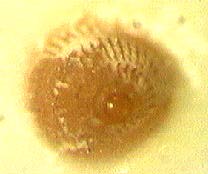 Annepona mariae: Note the strong longitudinal ridges. Although the adult shells are very different, the protoconchs of childreni and mariae are quite similar, and distinct from all other cowries. |
Pediveliger of Naria flaveola (= labrolineata),
Scanning Electron Microscopy.