
Purpuradusta oryzaeformis sp. nov. (Mollusca: Gastropoda: Cypraeidae)
An overlooked species in the family Cypraeidae
by Felix Lorenz and Günther Sterba
Abstract:
A new species of Cypraeidae belonging to the genus Purpuradusta from Tuamotu is described on account of characteristics in dentition, fossula, colour pattern and radula. Shells of this taxon were formerly mistaken for P. serrulifera Schilder & Schilder 1938.
Material & Methods: 15 livecollected specimens of the new species from various Polynesian localities were available for the present study, eleven of which were randomly chosen and designated as types. Animals: two animals were found dried inside the shells. These were extracted using fresh water and a 10 % KOH solution. Radulae were extracted and examined using LindgrŸn staining. Shells of the new species and P. serrulifera were examined using Phillipsª LX 20ª scanning electron microscope.
Description:
Purpuradusta oryzaeformis sp. nov. (Mollusca, Gastropoda, Cypraeidae)
Very small (holotype length 8,6 mm), narrow cylindrical, with somewhat attenuated extremities. Base and labral margin slightly callous. Sides parallel throughout, tapering slightly in the anterior third. Aperture relatively narrow, especially posteriorly. In the anterior fourth the labrum is distinctly constricted, giving the aperture a sickle-shaped curve to the left. The fossula is very conspicuous, projecting, well separated from the anterior columellar teeth by a step. The 5 fossula denticles are swollen towards the edge. They are prolongations of the anterior columellar teeth. The holotype shows 20 columellar teeth which are equally spaced and fairly distinct throughout, running onto the columella, thickening towards the extremities. The columellar peristome is indistinctly ribbed in the posterior fourth, the ribbing gradually strengthens towards the fossula.
The dorsal ground colour is a very pale yellow. There are numerous very fine, irregular brownish spots. Five very narrow, parallel and distinctly darker brown transversal bands cross the dorsum, with the anterior pair being closer to each other than the rest. These bands are indistinctly interrupted throughout their length.
The extremities are tinted with lilac on each side. This tinting is visible also basally and inside the channels. The protoconch is hidden, comparatively large and somewhat darker than the extremities. Base and margins white, unspotted.
Variability:
The paratypes agree with the holotype in the above described features of shape and dentition. The tinting of the extremities may vary in degree. In some paratypes, the protoconch is exposed and situated above the posterior extremity. In one specimen from the paratype-lot two very faint darker marginal spots can be traced on the labral side.
The dimensions of the available specimens vary between 6,1 and 8,9 mm, the labral:columellar teeth counted vary between 16/18 and 20/22, there are 4 to 5 distinct fossula denticles.
Animal:
A living specimen of Purpuradusta oryzaeformis is illustrated by Burgess (1985) p. 136, as serrulifera. The mantle is smooth and reddish, a typical feature in smaller members of the genus Purpuradusta. The foot is pale yellow-white, tentacles orange.
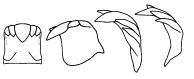
Fig. 5: P. oryzaeformis sp. nov., half row of radula
Radula:
The radula taken from two dried animals were indentical in the features of the denticles. Shows five denticles on the rhachial tooth. This feature was described for Palmadusta (Lorenz & Hubert, 1993) but was found to be characteristic for three examined species of Purpuradusta (oryzaeformis, minoridens, serrulifera) as well. The lateral teeth are comparatively large and curved, shwoing four strong denticles
Habitat:
Shallow water to 2 m, in lagoon areas, amongst dead coral rubble. Purpuradusta oryzaeformis appears to be a fairly common species in the shallow littoral of some Islands of the Tuamotus. Fresh dead specimens are commonly found in shellgrit.
Type Material, type depository and Measurements:
(enumerated: length, width (mm), number of distinctly swollen fossula denticles, locality, depository. (L) indicates a livecollected specimen.
Holotype: 8 ,5 4,2 5 Rarioa, Tuamotu (coll. HNC 44694)
Paratype 1: 7,7 4,0 4 L Takapoto, Tuamotu (coll. Lorenz)
Paratype 2: 8,4 4,3 5 Manihi, Tuamotu (coll. Lorenz)
Paratype 3: 8,4 4,5 4 L Anaa, Tuamotu (coll. Lorenz)
Paratype 4: 7,7 3,8 5 Tuamotu (coll. Lorenz)
Paratype 5: 8,8 4,5 4 L Rarioa, Tuamotu (coll. Lorenz)
Paratype 6: 8,3 4,2 4 Takapoto, Tuamotu (coll. HNC 44695)
Paratype 7: 7,4 3,6 4 L Loc. unknown (coll. Sterba)
Paratype 8: 8,3 3,9 4 Fangataufa (coll. Lorenz)
Paratype 9: 6,7 3,4 4 L Bora Bora* (coll. Lorenz)
Paratype 10: 7,5 3,5 4 L Bora Bora* (coll. Lorenz)
* In Lorenz & Hubert (1993) Plate 55 Fig. 21, 24, show Paratype 9, Fig. 26, 28 show paratype 10, both misidentified as P. serrulifera. The locality stated (Tahiti) is most probably erroneous.
The holotype and paratype 6 are deposited in the Malacological Museum Haus der Natur- Cismar (no. HNC 44694, HNC 44695), paratypes 1-5 and 8-10 are kept in the collection of the first author (No. FL 78841 - FL 78849), paratype 7 in the collection of the second author.
Type locality and distribution: The holotype was collected fresh dead on a beach at Raroia, Tuamotu. There are specimens known from Anaa, Takapoto, Manihi and Fangataufa.
Ethymology: The name oryzaeformis (oryza: lat. rice) refers to the small size, colour and shape of this species resembling a rice grain.
Discussion:
The tinting of the extremities, the character of the dentition, and the small size safely identify the new taxon as a member of the genus Purpuradusta, Subfamily Cypraeovulinae. The species of Purpuradusta are difficult to distinguish because of their small size. This is probably also the reason why the new taxon has always been overlooked and assigned to serrulifera.
The original description of P. serrulifera shall be reproduced here:
[From the PROCEEDINGS OF THE MALACOLOGICAL SOCIETY, Vol. XXIII, Pt. III, pp. 114-115, November, 1938.]
Palmadusta (Melicerona) serrulifera nov. is allied to P. (M.) minoridens Melvill in general shape and colour, but it differs chiefly in the peculiar features of the fossula and in having still finer and more numerous teeth. Shell small, cylindrical, depressed, anterior extremity hardly margined, base flattened, concavely impressed in front, aperture straight, dilated in front, teeth very fine and numerous, short behind, but anterior columellar teeth much projecting, fossula very narrow, ribs steep, not impressed (whereas they are bituberculate in fimbriata and slightly concave and declivous in minoridens), columella smooth behind. Dorsum very pale fulvous, regularly punctate with fulvous (the decorticated paratype shows five narrow interrupted ochraceous zones), sides and base whitish, extremities tipped with four pinkish lilac spots.
Holotype from Huahine I.: 10,9 x 5,6 x 3,7 mm., 22 labial and 22 columellar teeth; paratype from Henderson I.: 11,0 x 5,7 x 4,6 mm., 24 labial and 22 columellar teeth.
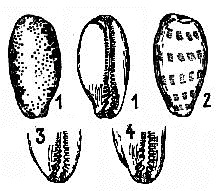
Fig. 1.Ñ Palmadusta (Melicerona) serrulifera nov., holotype from Huahine I. (no. 3148)
Fig. 2.Ñ Palmadusta (M.) serrulifera, paratype from Henderson I. (no. 6952)
Fig. 3.Ñ Palmadusta (M.) minoridens Melvill from Lifu (no. 2602)
Fig. 3.Ñ Palmadusta (M.) fimbriata unifasciata Mighels from Polynesia (no. 2307)
Fig. 1-4: Illustrations from the original description of serrulifera.
All examined specimens of P. oryzaeformis sp. nov. show a well defined dorsal banding consisting of five narrow interrupted bands. This feature is observed also in occasional eroded or subadult P. serrulifera. Paratype 1 seems to be an eroded specimen (Fig. 2). Another shell showing the dorsal banding is a subadult deposited in coll. Hubert, Erlangen (pers. comm. 1997).
Purpuradusta oryzaeformis differs from all other taxa in the genus by having this characteristic dorsal banding in the adult shell. It is the smallest member in the group, with an average size of 7,6 mm. P. serrulifera appears to be most similar to P. oryzaeformis. Latter has a projecting fossula separated from the anterior teeth by a step, the columellar peristome is ribbed. In serrulifera, the anterior columellar teeth are distinctly pronounced, forming a saw -like (name!) structure which is comparable to that of the non-related Naria irrorata (Subfamily Erosariinae). This species has a much narrower labrum, and a curved terminal ridge. Latter is rather straight in P. oryzaeformis. See SEM photos on plate 1 for these details.
The dorsal spotting in serrulifera is coarser, and more distinct. The general shape of P. oryzaeformis is always narrow-cylindrical, while in P. serrulifera there is a tendency towards a more inflated, pyriform shape. The dorsal line visible in well preserved, live collected serrulifera is absent in P. oryzaeformis.
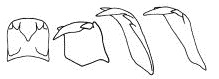
Fig. 6: P. serrulifera, half row of radula
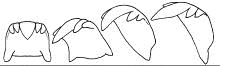
Fig. 7: P. minoridens, half row of radula
The radulae of P. oryzaeformis, P. serrulifera and P. minoridens are quite different as can be seen in the scetches (Fig. 5-7).
A conchological comparison should finally be made with microdon, fimbriata and minoridens, all of which can be similar in size and general appearance.
P. microdon is fairly distinct from other members in the genus by being rather inflated and pyriform, by the different character of the dorsal banding and the finely denticulate fossula, which is not projecting. In microdon, the aperture is narrow throughout, placing this species in a unique position within the genus (Lorenz & Hubert, 1993, p. 149).
P. fimbriata has much coarser anterior teeth and lacks a projecting fossula. It differs also in shape and the character of the irregular broad dorsal banding.
P. minoridens is broader and slightly oval. Its fossula is not projecting, the labrum hardly constricted. Minoridens is also much darker, with purple, more conspicuous extremities. Finally, the dorsal banding consists of indistinct darker zones with a broad middorsal band more similar to fimbriata. Occasionally there are narrow transverse bands similar to those in oryzaeformis, but these are irregular, fewer in number, and often fused middorsally.
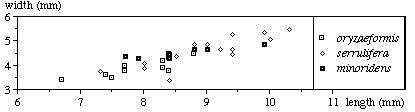
Table 1: Comparison of width-to-length-relation of three related Purpuradusta species
A comparative table (table 1) of width-to-length-relation of some randomly chosen specimens of P. oryzaeformis, P. serrulifera and P. minoridens shows the tendency of oryzaeformis to be smaller than serrulifera and somewhat narrower than minoridens.
Purpuradusta oryzaeformis is one of the most eastern representatives of the genus. Its small size and narrow shape, along with a produced fossula can be understood as extreme, derived features. Its closest living relative is probably minoridens, on account of the fossula being separated from the anterior columellar teeth by a distinct step, a feature not found in P. serrulifera. Latter is unique in the genus because of its modified anterior columella area forming a saw-like structure which is found directly brodering the anterior columellar side of the aperture. With the new taxon, the genus Purpuradusta consists of eight species:
fimbriata (Gmelin, 1791): Indo-Pacific
microdon (Gray, 1828): Indo-Pacific
gracilis (Gaskoin 1849): Indian Ocean to Western Pacific
minoridens (Melvill, 1901): Indo-Pacific
hammondae Iredale, 1939: Central Pacific
serrulifera (Schilder & Schilder, 1938): Tahiti
barbieri Raybaudi, 1986: Tahiti
oryzaeformis sp. nov.: Tuamotu
Acknowledgements:
We wish to thank the following persons for kind assistance and advice:
Prof. Dr. K.-J. Götting, Zoological Institute of the University of Giessen; Prof. Dr. A. Hubert, Erlangen; Prof. Dr. Kilias, Berlin; Dr. H.-W. Koyro, Strahlenzentrum Gie§en; and H. SteinmŸller, Zoological Institute of the University of Giessen;
References:
Allan, J. (1956): Cowry Shells of World Seas. Melbourne, Georgian House.
Burgess, C. M. (1970): The Living Cowries. Cranbury, New Jersey, USA, A. S. Barnes & Co.
---- (1985): Cowries of the World. Cape Town, Gordon Verhoef, Seacomber Publications.
Cernohorsky, W. O. (1964): The Cypraeidae of Fiji. The Veliger 6(4): 177-201.
Lorenz, F. (1989): Descriptions of new subspecies from Southeast Africa. Schriften zur Malakozoologie (Cismar) 2: 8Ð18.
Lorenz, F. and Hubert, A. (1993): A Guide to Worldwide Cowries. Chr. Hemmen Verlag, Wiesbaden.
Raybaudi Massilia, L. (1986): Palmadusta (Purpuradusta) barbieri, species nova. The Connoisseur of Seashells 12: 48Ð52.
Roberts, S. R. (1885): Monograph of the Family Cypraeidae. in: Manual of Conchology. G. W. Tryon. Philadelphia. 7: 153Ð304 and Plates 1Ð23.
Schilder, F. A. & Schilder, M. (1938a): Description of two new CowriesProc. Malac. Soc., Vol. 23, p. 114
---- (1938b): Prodrome of a Monograph on Living Cypraeidae. Proceedings of the Malacological Society London 23: 119-231.
---- (1952): Ph. Dautzenberg's Collection of Cypraeidae. Memoires Institut Royal des Sciences Naturelles de Belgique (2. ser.) 45: 1Ð243 and Plate I-IV.
---- (1971): A Catalogue of Living and Fossil Cowries - Taxonomy and Bibliography of Triviacea and Cypraeacea (Gastropoda Prosobranchia). Memoires Institut Royal des Sciences Naturelles de Belgique (2. ser.) 85: 1-246.
Steadman, W. R. and B. C. Cotton (1943): The cowries (Cypraeidae) of Fiji. Records of the South Australian Museum 7: 309-336.
Plate 1
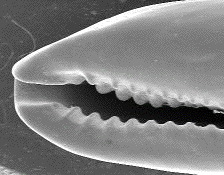
Fig. 8: Purpuradusta oryzaeformis sp. nov. SEM, anterior apertual view
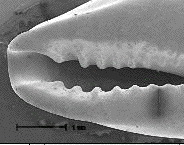
Fig. 9: Purpuradusta serrulifera, SEM, anterior apertual view