
Ransoniella martini - a variable, widespread species
One of the smaller cowries that have a certain mystery because of their strange shape and cryptic habitat is Notadusta martini Schepmen. On recent trips to Indonesia on board the "EMPRESS" we have collected a few specimens, always dead, and I wondered what I could find out about its distribution and possible geographic subspecies. Originally described from a subfossil shell, Schilder (1930) named "superstes" as surviving subspecies from New Caledonia. In our "Guide (1993)" Alex Hubert and I agreed that: "The common usage of the name "superstes" for the darker New Caledonian variety seems unjustified. In the original description the 'surviving' "superstes" was claimed to differ from martini in the much denser labral dentition which was observed in the single specimen available. The presently available material of living martini varies in size, shape and colour, but the density of the labral dentition does not deviate significantly from that described for martini."
Having said that, what is the situation ten years later, with several hundred specimens from various places at hand. Lets look at the distribution first: martini ranges from Western Polynesia (confirmed: Futuna Is. and Tonga), Micronesia (confirmed: Kwajalein Atoll), Melanesia (confirmed: New Caledonia, Solomon Is., Kavieng and Rabaul) to Queensland, Okinawa, the Philippines to the western coast of Kalimantan where I found it at Tambelan Is. and Muri Island, and finally, the southwest of Sulawesi, 30 km north of Makassar where I found a nice dead one in rubble at 25 m.
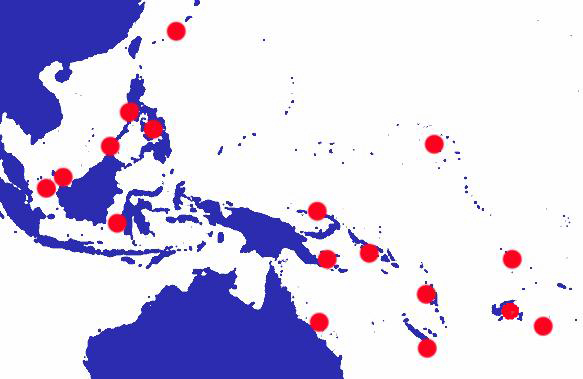
The depth-range is considerable: In New Caledonia the species is found as shallow as 8 m, mostly in caves, whereas the deepest records were made by the Paris Museum MNHN at Futuna Is. in 200 m.
Conchologically, the degree of dental staining, the distinctness of the dorsal banding, the rostration of the extremities and the density of spotting all seem qualitative and highly variable. There seem to be three indistinct and highly variable conchological groups:
1) Medium sized, inflated shells of dark brown color, with rostrate extremities that are often stained with darker, coarsely stained teeth and mostly distinct banding, with Philippine shells being paler and more rostrate, and specimens from New Ireland being more curved and darker (Indonesia, Philippines, Kavieng: martini typical form)
2) Small, pellucid yellowish shells with distinct banding, finely stained teeth and mostly sparse spotting (Kwajalein)
3) Large, inflated shells of brownish color, with comparatively narrow extremities and finely stained teeth (New Caledonia = "superstes")
The only constant feature we can see right away is that the Kwajalein shells are always yellow-pellucid instead of brownish. Whether any of the other features are not constant enough for a subspecific separation might be proven in a statictical analysis taking into account the dentition and shell ratios.
The pictures in the following show the variability of martini from various places.
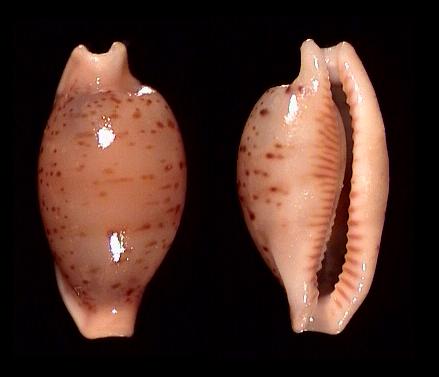
Tambelan Is., Borneo, 38 m in rubble
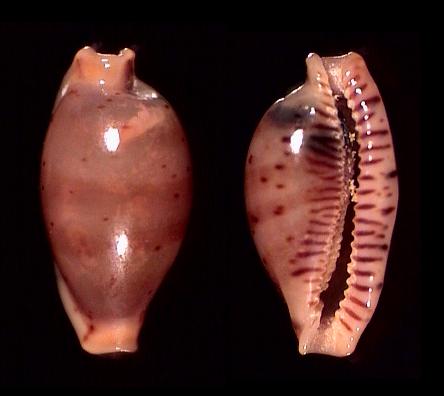
30 km north of Makassar, SW Sulawesi, 25 m in rubble
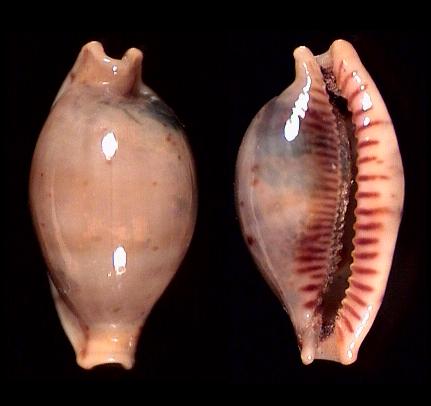
Zamboanga, Philippines, in tangle net from 80 m
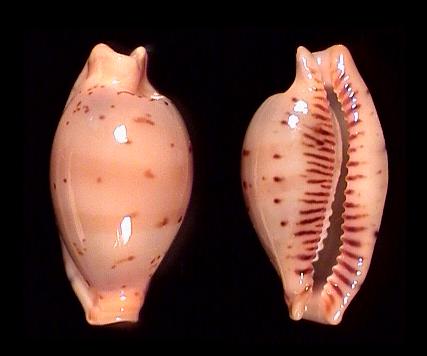
Aliguay, Dipolog, NW Mindanao, Philippines, trawled from 150 m
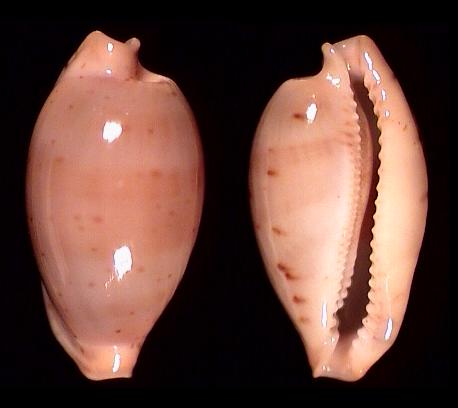
Rabaul, New Britain, by diver at 25 m
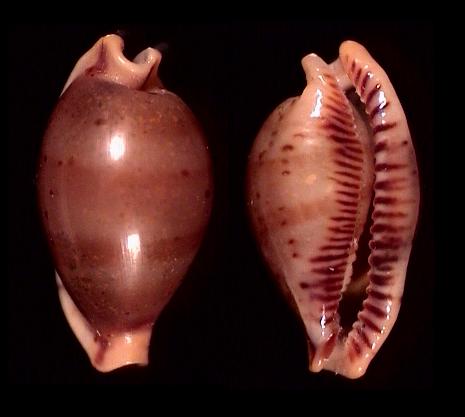
Kavieng, New Irland, by diver at 35 m
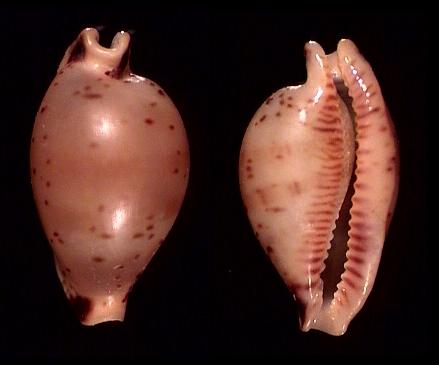
Kavieng, New Irland, by diver at 35 m
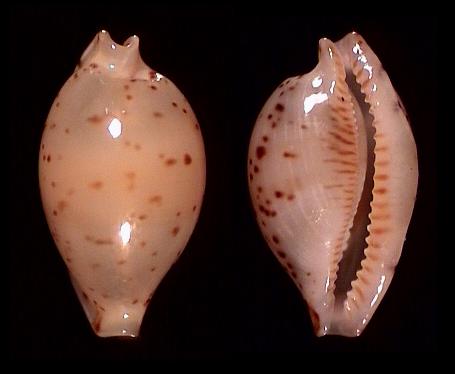
Kwajalein Atoll, by diver at 35 m
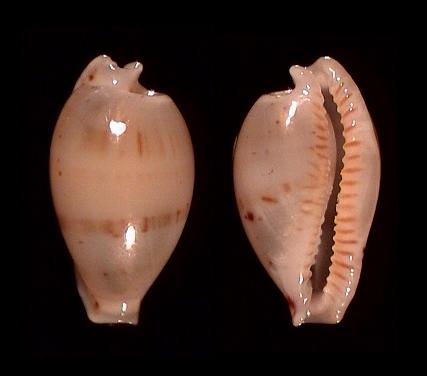
Kwajalein Atoll, by diver at 35 m
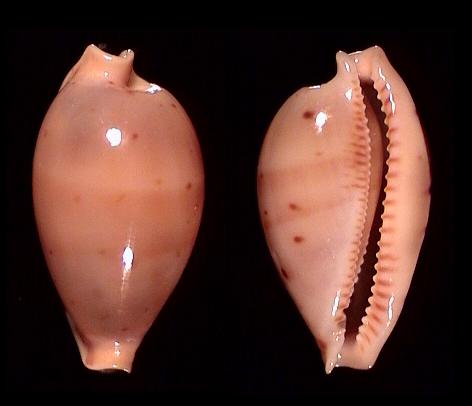
Noumea, New Caledonia, in cave at 10 m
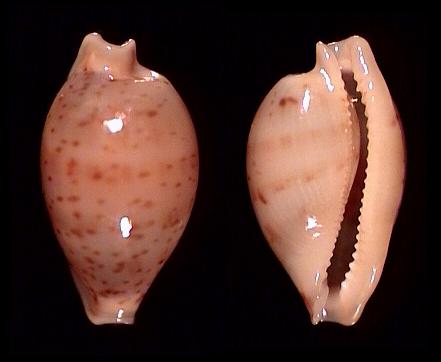
Noumea, New Caledonia, in cave at 10 m
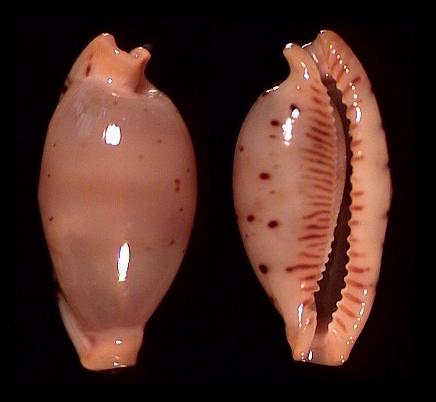
Oven Island, Woodin Channel, S. New Caledonia, in cave at 25 m
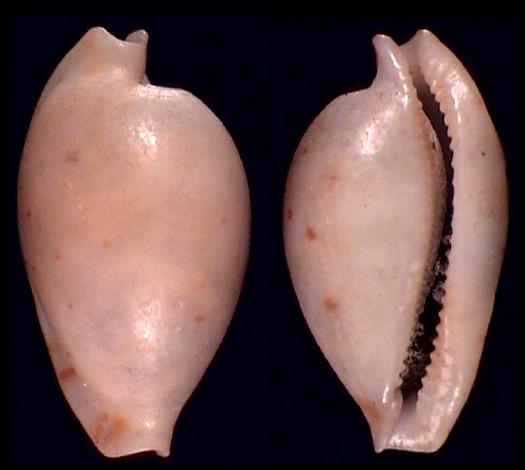
Futuna Island, off 200 m (coll. MNHN)