
Cypraeovula "iutsuina", "perdentata"
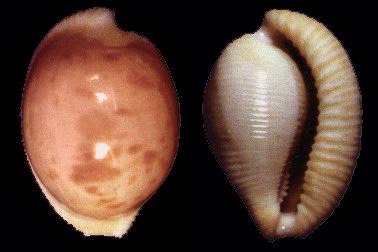
|
Fig. 1: Cypraeovula iutsuina Raybaudi 1995 "Holotype",
probably Port Alfred area, deep water |
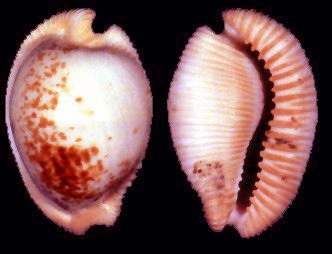
|
Fig. 2: Cypraeovula perdentata Raybaudi 1995
Holotype, Port Alfred area, deep waterNote the strong teeth, callous sides and smooth dorsum. |
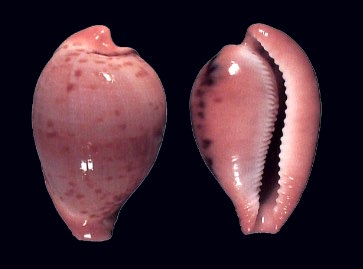
| Fig. 3: Cypraeovula immelmani Liltved
2001 Holotype, Port Grosvenor, S. Africa, off 100m: A specimen with more inflated shell, reduced ribs and very slight fossula. |
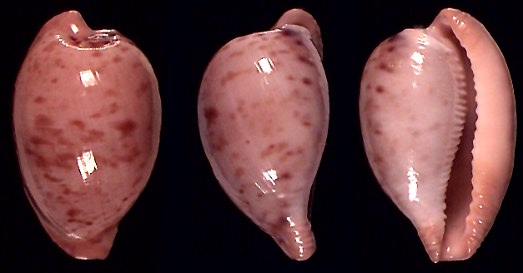
| Fig. 4: Specimen corresponding to the holotype of immelmani, Port Grosvenor, S. Africa, off 100m |
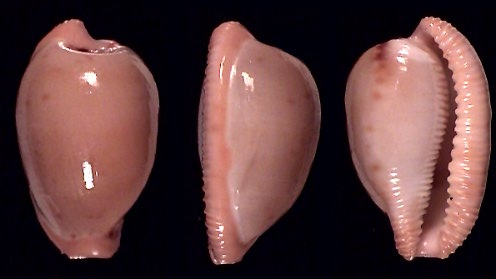
| Fig. 5: Specimen with stronger riblets Port Grosvenor, S. Africa, off 100m, fossula slightly produced |
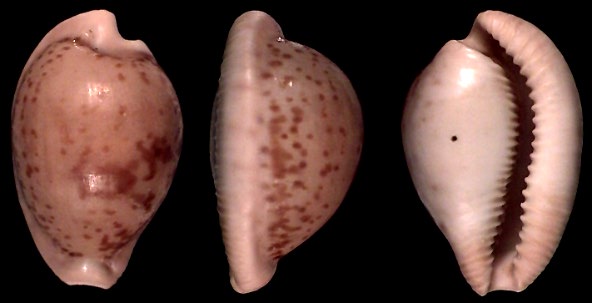
| Fig. 6: Cypraeovula colligata Lorenz 2002, Paratype, from Mbotyi, Pondoland off 100 m |
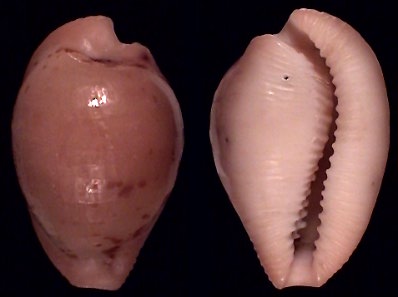
| Fig. 7: A typical specimen of C. colligata,
northern Transkei, off 120 m, note the faintly ribbed base and
the ribbed peristome, a unique feature in living Cypraeovula, but found in the Pliocene C. mauwei Aiken 2016. |
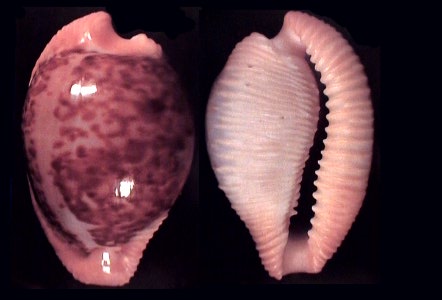
| Fig. 8: Cypraeovula kesslerorum Lorenz 2006, East London area, off 120 m, note the distinctly ribbed base and the ribbed peristome. This species from the East London area has stronger basal riblets, but the ribbed peristome and general pattern reveal that it is related to C. colligata. The more globular shape suggest a relationship tp connelli, whereas the riblets remind of capensis and the mysterious iutsuina. |
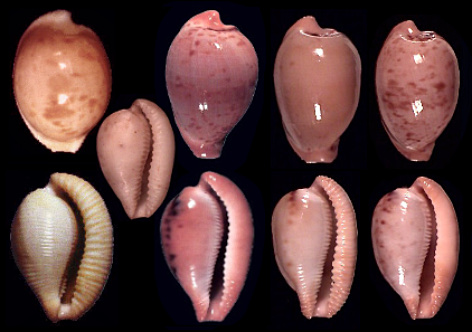
| Fig. 11: left: iutsuina, holotype. middle: colligata, subadult. 3 shells on right: immelmani |
|
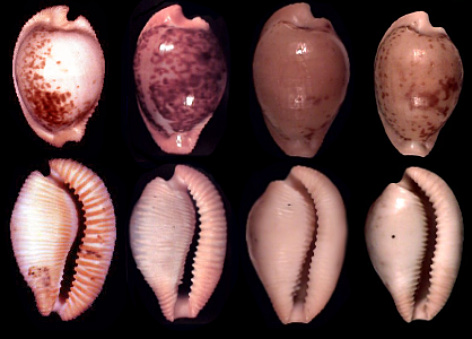
Fig. 12: left: perdentata, holotype. middle left: kesslerorum,
East London. 2 shells on right: colligata, typical from
N. Transkei.
The current (tentative) placement of the names involved is done under the belief that most of them represent hybrids: immelmani= valid colligata= hybrid immelmani x connelli kesslerorum= hybrid capensis x connelli "iutsuina"=hybrid capensis x volvens "perdentata"=hybrid capensis x fuscodentata However, a more comprehensive range of shells might abrogate the hybrid-thesis: if actual thriving populations of the supposed hybrids can be located and studied. |