
A critical look at taxonomy and those who meddle with it, myself included
A principle task of taxonomy is
to give names to things - so we can talk about them. There have been
times when a "good taxonomist " would publish descriptions that
consisted of a binominal name and a latin description that was a brief
as could be, with a reference to a lithograph that would be as
indecipherable as could be. In the fifties and sixties of the last
century, a respectable taxonomist was the one who named the least
taxa. In the last two decades, we were facing different influences in
modern taxonomy; to some
people, it is a key to immortality. The result is a vast number of
confusing names of things that either have already been named before
(avrilae, gabensis, lovethae), or that should not get named at all
(e.g. 16 species of punctata). There are others who look at taxonomy as
a national sport in which taxonomists of other countries need to get
beaten down while the home team is great, regardless (e.g. in the
evaluation of delicatura). Finally, ever since the genetic revolution,
there have been people* who postulate that a new taxon needs to have a
DNA
analysis before it can be accepted by the scientific society. On the
other side of the spectrum, there are people who abuse the tools of
taxonomy to produce names for commercial reasons, and there are
publishers who happily fill their magazines with this garbage**.
* Mainly those whose understanding of DNA analysis does not go beyond the point that it is "very scientific and mandatory in all its complexity". **Taxonomy is a science within Biology, so people getting involved in it should at least follow the simple principle that a scientific publication needs to be reproducible. When the differences described in the discussion cannot be traced in the material offered, and especially, when a comprehendible discussion is missing altogether, the term garbage seems more appropriate than scientific publication. The rules of taxonomy (ICZN) appear not to apply to malacology and the world of cowry-enthusiasts. Till this day we are happily using names that have never legitimately been introduced according to the ICZN - also in publications with a "scientific attitude" - we see names introduced as "forms" used as if they were legitimate taxa. My own publications are an example. As in the case of those forma-names, the ICZN is not involved, it is a matter of personal tast whether or not to use forma-names to describe any variation that is below the subspecies-level. Having said all that, I need to clarify that a name published on the internet as done in the following has no relevance in taxonomy whatsoever. If collectors and dealers start to use it in reference to my website, because it facilitates communication, then they are welcome to do so. But bear in mind that the name is not available for a scientific publication unless somebody goes ahead and legitimizes is in accordance with the ICZN. Zoila eludens
f. decepticolor nov.
by Felix Lorenz and John D. Daughenbaugh Introduction: Zoila eludens is an
outstanding species known from only a few spots in the vicinity of
Exmouth, NW Australia, namely the Murion and Peak Islands. It is
subdivided into the classic eludens and the form or subspecies delicatura, which
differs in being smaller, with a darker colouration
of the interiour of the shell. These features go along with a slightly
more northern range with a wide overlapping zone.
Shell-divers have found Z. eludens in different "patches", and each excursion produced shells that had certain features characterizing the respective "catch". During the last three years, the first author received a set of specimens showing an interesting set of features to which we have given a closer look. Material: 30 specimens of the form described herein, the same number of typical Z. eludens collected between the years 1999 and 2007. Description: Shell large, solid. General shape pyriform, anterior extremity evenly tapering, posterior extremity calloused and blunt. Spire slightly pointed, covered with callus. Base flat, margins rather angular. The teeth are restricted to the apertural area on either side, they are well produced throughout labrally but are less distinct midways on columellar side. The fossula is slightly projecting and smooth. The aperture is equally narrow throughout, very slightly curved posteriorly. The ground colour is yellow cream dorsally and on the non-calloused parts of the columella. The interior of the shell is pale cream, somewhat darker towards the anterior canal. The base and labrum are saturate yellow along the margins and the aperture, gradually becoming darker towards the middle. That region is stained with a more or less distinct blotch of greyish-black. The teeth are often stained orange. The margins are high, more or less densely spotted with black, and there is a dark zone of fine spots below a blue halo encircling the dorsum. That is densely mottled with solid black dashes which may form a compact black coat. Habitat and distribution: known from several small patches in the south of Murion Island, Exmouth area, at 30-35 m in strong current. Discussion: Zoila eludens is a variable and very colourful species. The new form (Fig. 1) described herein is characterized by having black basal blotches. In typical Z. eludens (Fig. 2), the base is cream to saturate red, only rarely there is a darker, grey to black area. In typical Z. eludens, the posterior extremity is slightly projecting, in most Z. eludens f. decepticolor it is mostly blunt and shorter. The darker zone of spots and black colour along the margins in the new form varies, but usually is far more developed than in dark specimens of Z. eludens, which is also less dark dorsally. The shell formulae taken from ten specimens of each form reveal that the reduced number of teeth in eludens is slightly lower on columellar side: eludens: [61(66–59)14:11], decepticolor: [62(67–60)15:13]. Z. eludens is closely related to Z. decipiens suprasinum from the same geographic region. The "patches" inhabited by either species do not seem to overlap, but specimens of Z. decipiens suprasinum with features of Z. eludens are known. These shells have paler brown margins with distinct darker spots and a paler overall colour (Fig. 3). For this reason, Z. eludens f. decepticolor seems closer related to Z. d. suprasinum on account of the black basal blotches and the darker overall colouration. The new form is named
decepticolor for two reasons. Our hypothesis is that Z. eludens f. decepticolor is a closer relative
to Z. decipiens (and its
southern subspecies suprasinum
in particular) than the typical Z.
eludens, based on the more decipiens-like
colouration.
Secondly,
we have eliminated those shells from the set of
paratypes that seemed "inconvenient" for creating our new form. Among a
batch of 20 shells there were three or four that were rather pale
basally (may be these could become a sub-form "intermedicolor"). Therefore, the
name decepticolor also refers
to the fact that colouration can be deceptive when based on direct
comparison of last week's catch and shells that have been sitting in
the drawer for a decade or so. The difference in teeth-count is
interesting, apart from the existence of those exceptionally dark-based
shells which we had not seen even in the days when our ten year old
shells were fresh.
Concluding, we assume that more comparison-material, DNA study, exact information on the distribution and other factors may help to shed more light on the matter. 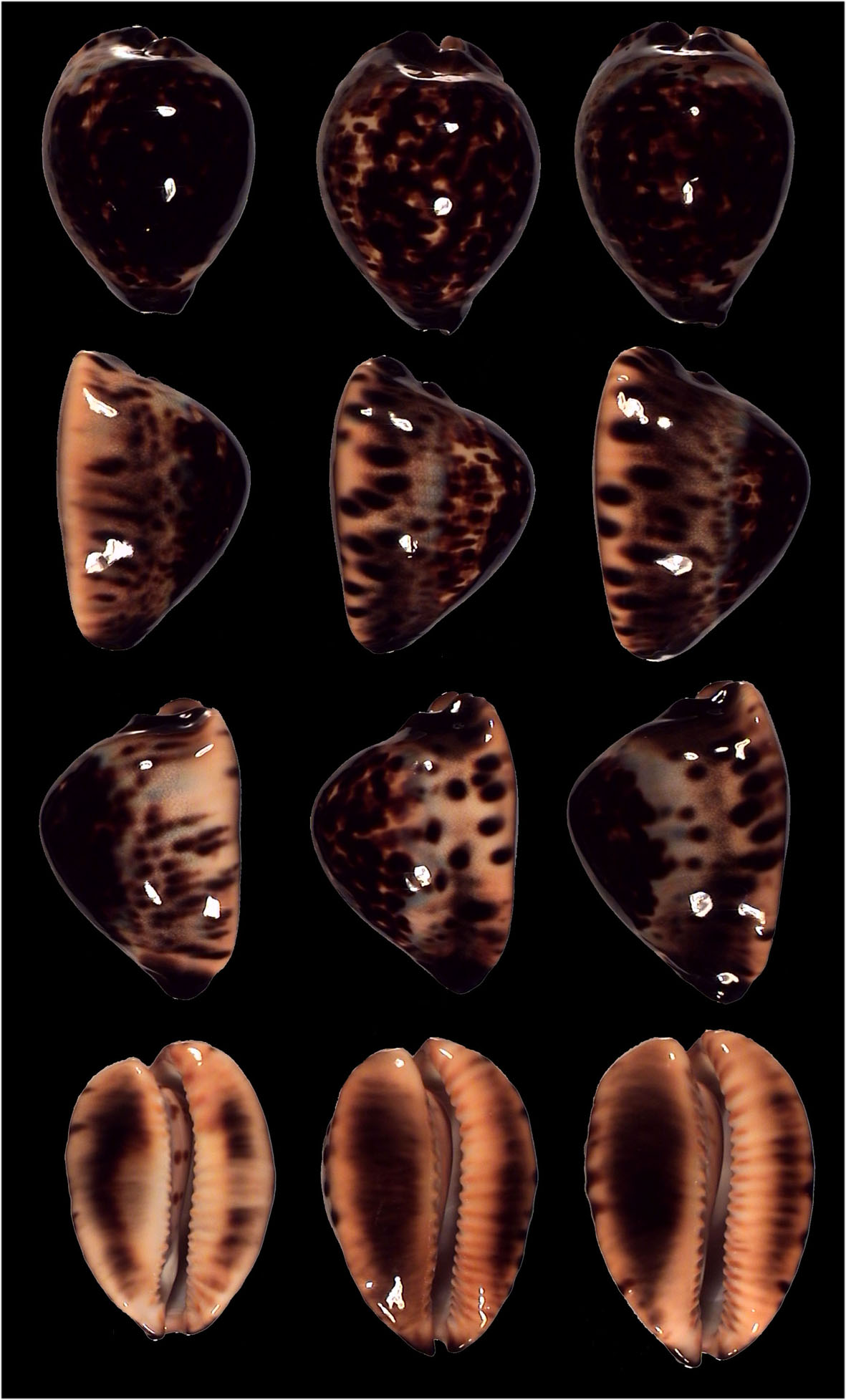 Fig. 1: Three well typical specimens of Zoila eludens f. decepticolor 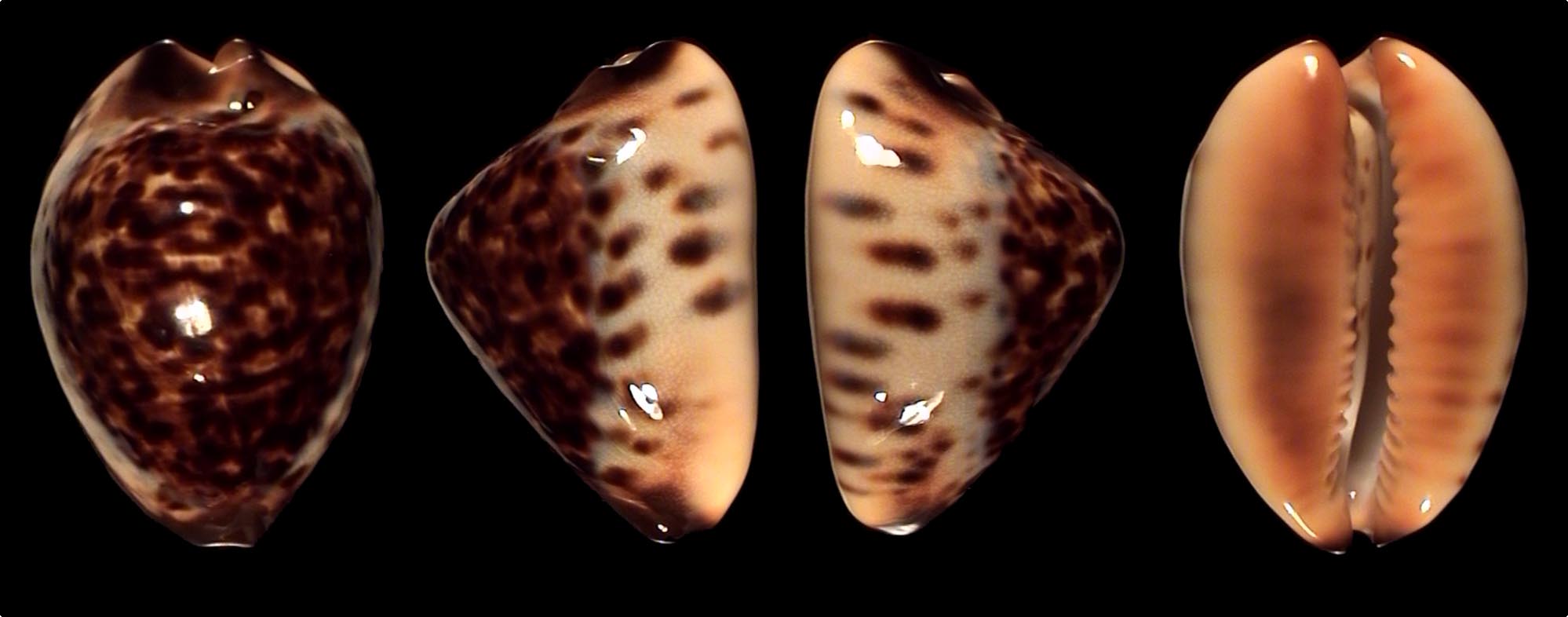 Fig. 2: Typical Zoila eludens 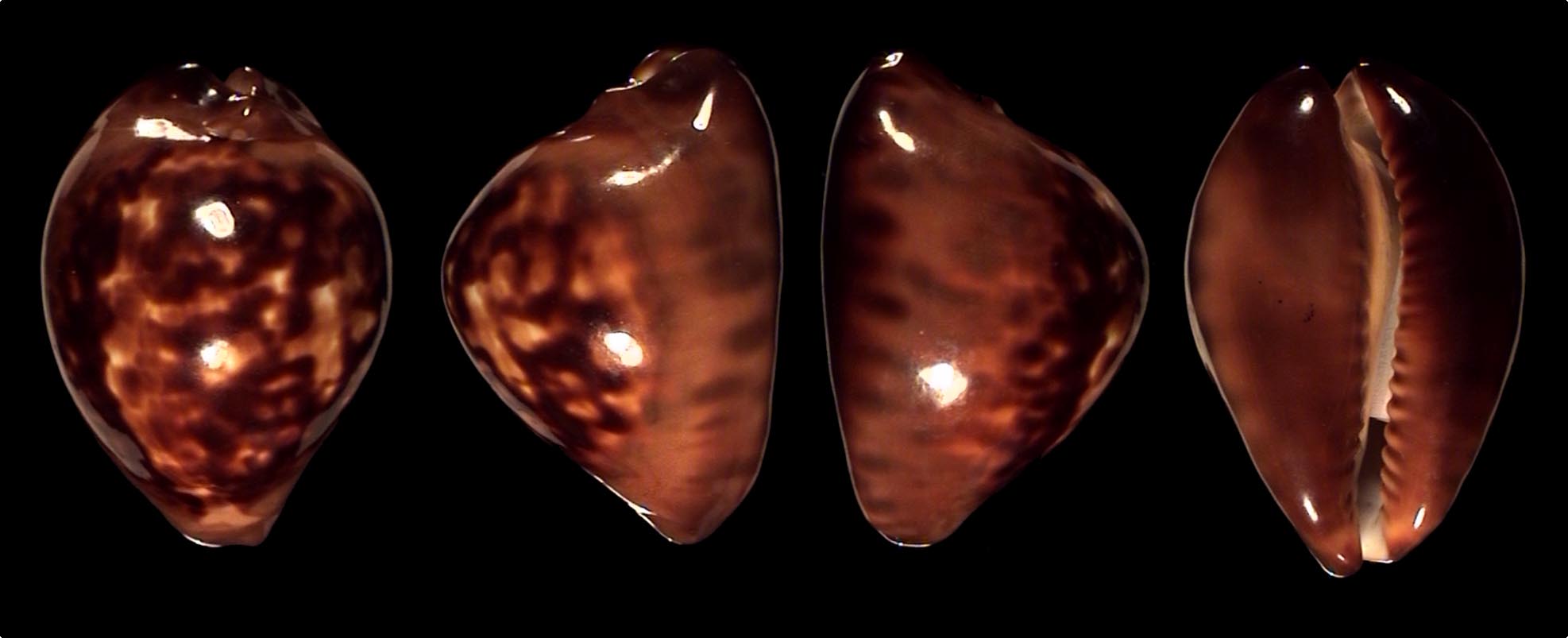 Fig. 3: Zoila decipiens suprasinum, spotted variety |