Cribrarula comma Perry 1811 and francescoi Lorenz 2002
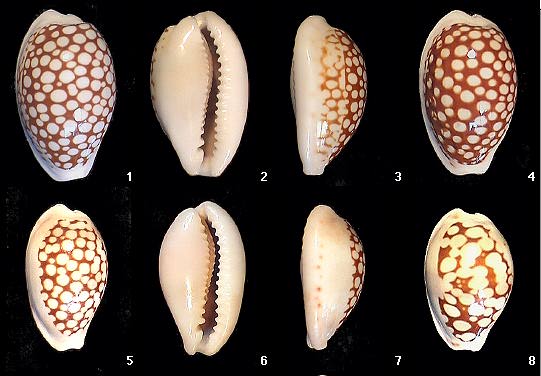
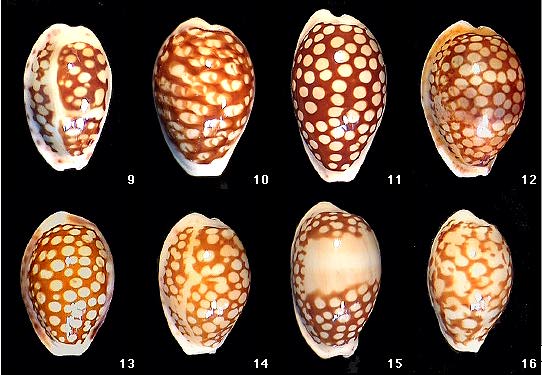
These pictures were made to illustrate the variability of comma (in the good old lumper days, a subspecies of cribraria).
Now, the whole genus has been split up on account of deeper insights on their biology, zoogeography and genetics.
We are now distinguishing comma and francescoi, the latter having coarser, less numerous teeth, a reduced to absent pattern along the labrum, and more or less distinct labral spots.
Finally, there usually is a marked darker middorsal band in francescoi, not very well visible in the shells depicted here.
Personally, I agree with everyone complaining that things used to be easier in Burgess' days.
Note 2021: things have been easier even in my days, but the molecules have spoken. There is a comprehensive treatise of the Cribrarula taxa in G3 Vol. 1.
1 - 4: comma, Zanzibar Island. Typical specimens
5 - 9: francescoi, Southern Madagascar. Variation with marginal spots.
10: comma, Tanzania. Specimen resembling the holotype (with comma- shaped markings)
11: comma var. setepausensis, Punta Zavora, Mozambique
12: comma fraserorum, Natal, South Africa
13: comma, Unusual specimen from Zanzibar Island
14: comma toliaraensis, Tulear, Madagascar
15 - 16: comma, Colour variations, Tanzania
uploaded 1999, revised 12/2002