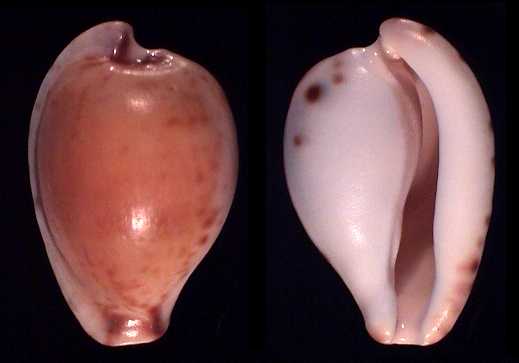
Cypraeovula algoensis and edentula:
|
One of the frequent questions in recent years has been which name one shall use for the variations of Cypraeovula algoensis and edentula. The following shows the most important formae and put names to them, names that have been proposed by myself and other authors. You will note that there are conchological transitions between all these shells, and I am deliberately trying to show them. Why not luming them all together and have peace? Well, nature is diverse, and we are whitnessing a great deal of radiation in the Cypraeovula. As the respective populations taken alone are pretty distinct and consistent in their features, only a mixture of shells from various localities really presents difficulties at times. It is in the eye of the beholder how to treat the various forms in the management of a shell - collection. To the Biologist, there is no other way but recording the variability as comprehensively as possible, taking into account all the geographical, bathymetrical and morphological data available. For a clear communication between biologists, having all these names at hand is very useful. It is only a matter of knowing exactly which name belongs to which shell. I hope that this gallery might help to identify the most common forms.
The map shows the South African coast. The localities are: 1: Kreef Bay (near Table Bay); 1a: the south coast of Namibia; 2: Hout Bay; 3: Soetwater, offshore Kommetjie; 4: Bettys Bay, just east of False Bay; 5: Mossel Bay; 6: Cape St. Francis; 7: Aston Bay; 8: Jeffreysbay; 9: Port Elizabeth; 10: Port Alfred; 11: East London; 12: Nthlonyane, Transkei |
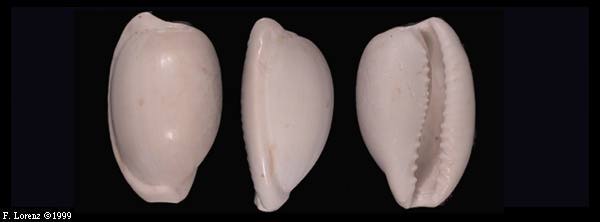 algoensis namibiensis Massier 2006 was recently described on the basis of white, faded, dead collected shells from southern Namibia. The shells are flattened, with fewer teeth, quite similar to the "tablensis" form of algoensis. The validity of namibiensis as separate subspecies requires further study, and better preserved shells. |
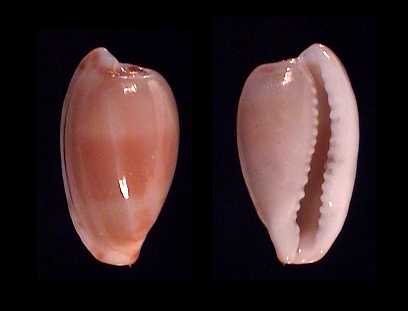 algoensis namibiensis. From Kreef Bay, near Table Bay. An extreme form from 10 - 25 m, very slender and small, from the northern limit of the species' distribution. This population was formerly called "tablensis" Raybaudi |
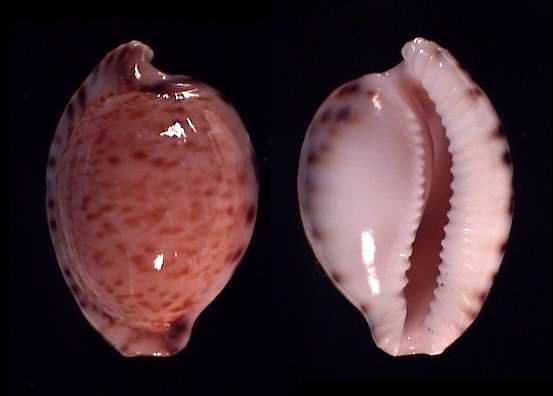 algoensis algoensis, Hout Bay, a callous specimen of the typical form, from 42 m |
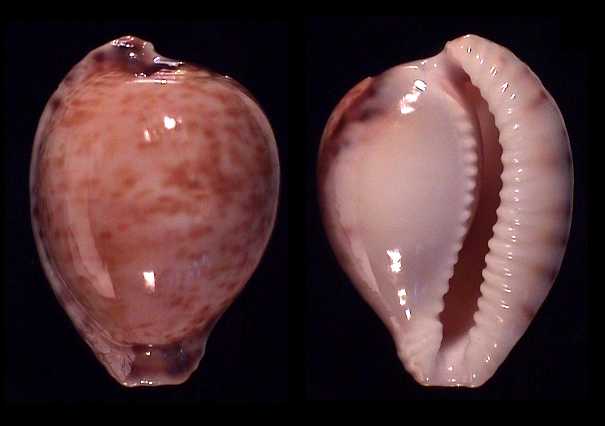 algoensis algoensis, Soetwater, a callous specimen from 55 m (this is the area and depth where atlantica is found). Such callous shells from the Atlantic should not be confused with algoensis permarginata from the Indian Ocean. |
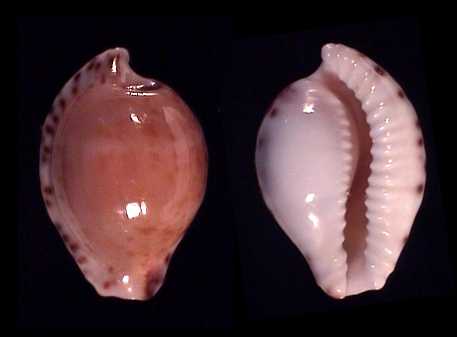 algoensis liltvedi, Bettysbay, a small specimen of the Indian-Ocean subspecies, from 35 m. This population was formerly called "bettyensis". |
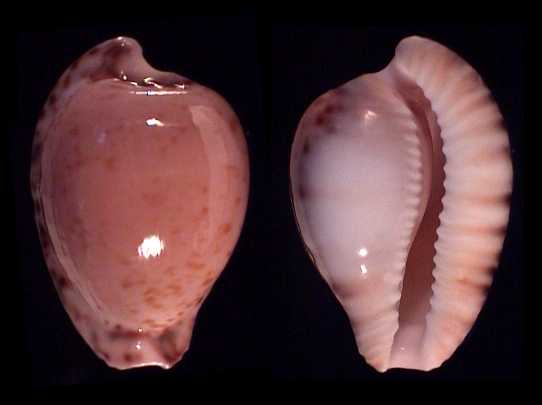 algoensis liltvedi, Bettysbay, a callous purplish specimen of the Indian-Ocean variant, from 35 m. Note the marginal spotting forms stripes! |
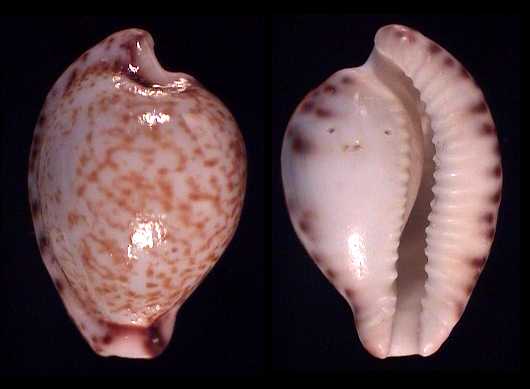 algoensis liltvedi Bettysbay, a magnificent white specimen of the Indian-Ocean variant, from 35 m |
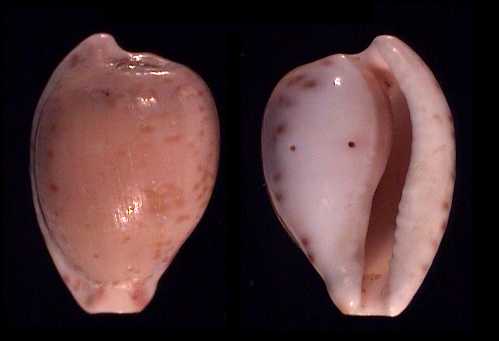 algoensis permarginata, Mossel Bay, off 120 m, Paratype #3. This shell represents the only record of permarginata from that far west. Note the fading teeth, this is a feature normally found in eastern specimens. |
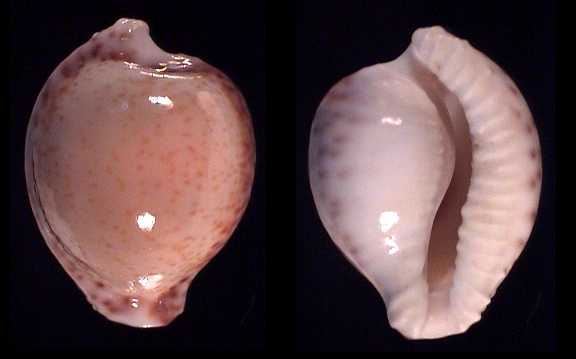 algoensis permarginata, 100 kms west of Cape St. Francis, off 180 m, typical form. Note the callous margins (hence the name) and the long labral teeth reaching the margins. |
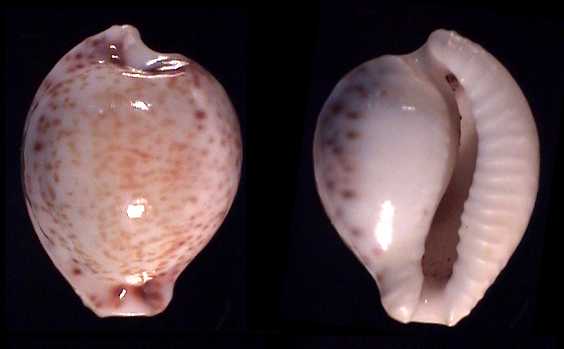 algoensis permarginata, 100 kms west of Cape St. Francis, off 150 m, typical shell. Note the callous margins (hence the name) and the long labral teeth reaching the margins. |
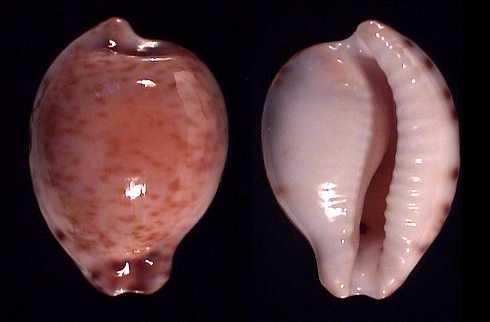 algoensis permarginata, Cape St. Francis, off 150 m, specimen with less distinct teeth. |
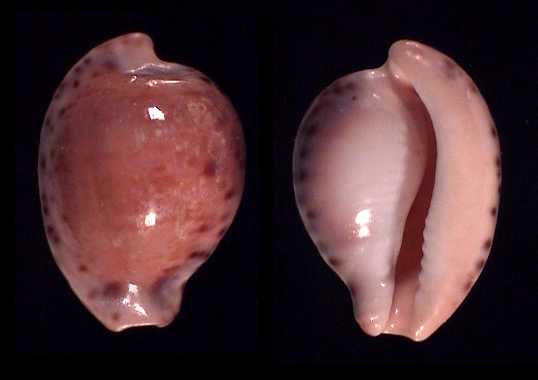 edentula sanfrancisca "astonensis", Cape St. Francis, off 200 m, very callous shell with reduced teeth. |
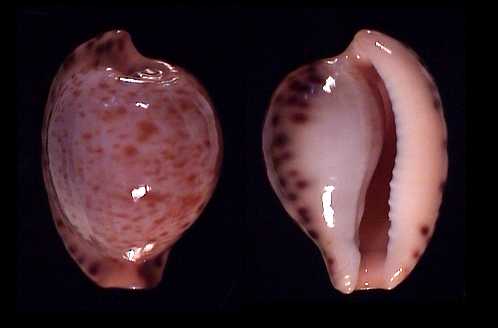 edentula sanfrancisca "astonensis", between Cape St. Francis and Port Alfred, from 80- 120 m. This is a callous eastern variant approaching edentula astonensis conchologically. |
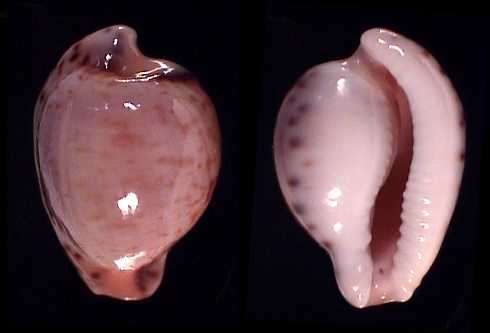 edentula sanfrancisca "astonensis", between Cape St. Francis and Port Alfred, from 80- 120 m. This is a callous eastern variant approaching edentula astonensis conchologically. |
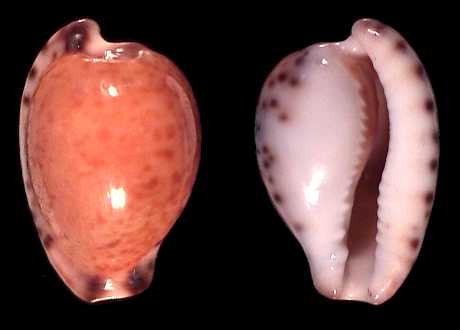 edentula sanfrancisca, Cape St. Francis, by diver 45 m. Paratype # 1. This is the typical form, which is rather light in weight. |
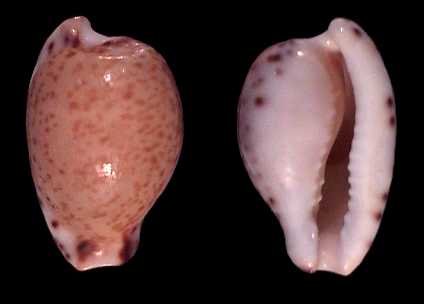 edentula sanfrancisca, Cape St. Francis, by diver 45 m. Paratype # 4. This is the typical form, which is rather light in weight. |
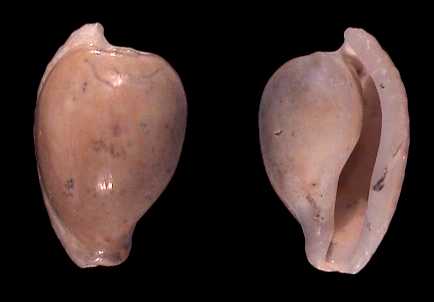 algoensis permarginata var.?, Cape St. Francis, dredged off 100 m. Paratype #4 of permarginata. This unique shell was found long before the populations of sanfrancisca were discovered. It has distinct labral teeth only OUTSIDE of the aperture, along the marginal edge of the labrum! When I described permarginata, it was assigned to this subspecies as there were no other forms of algoensis known to me from that far east. |
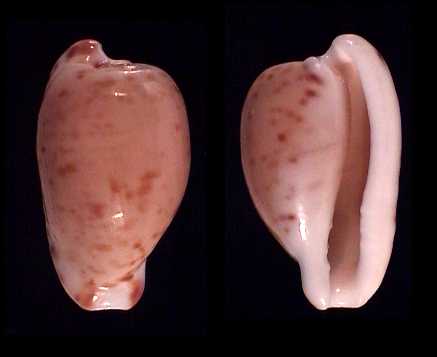 edentula edentula, Cape St. Francis, found beached. This the westernmost population of edentula, frequently washing ashore just a little east of the Cape St. Francis settlement. Note the very faint teeth! A classic intermediate considering the sanfrancisca- population from just somewhat deeper water reaching even further east till Jeffreysbay. |
|
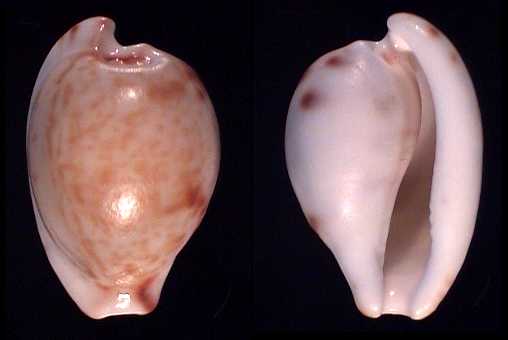 edentula sanfrancisca "astonensis", Jeffreysbay, found beached. Another callous, exceptionally well preserved specimen. |
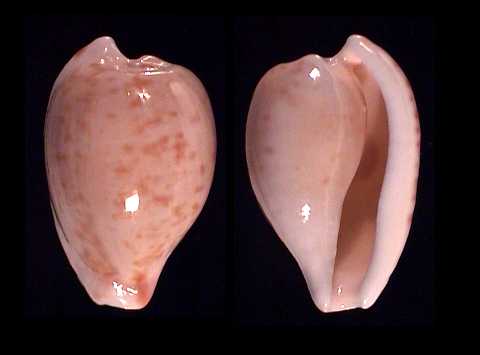 edentula edentula, Jeffreysbay, collected on the beach, this form lives in depth between 8 and 15 m. Typical form. |
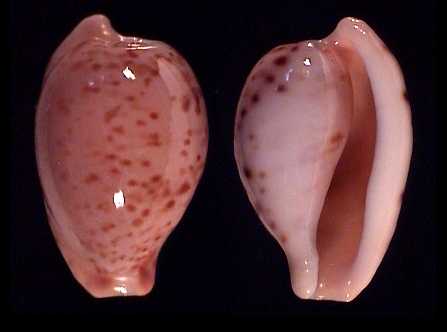 edentula edentula, Port Elizabeth, from 12 m. Typical form. |
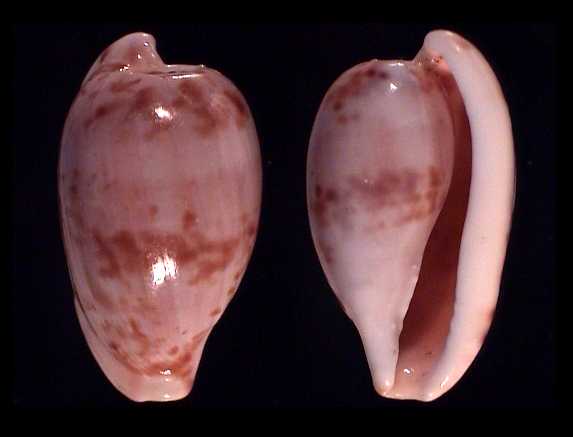 edentula nahoonensis, Port Alfred, found beached, lives in depths around 25 m. Typical form. |
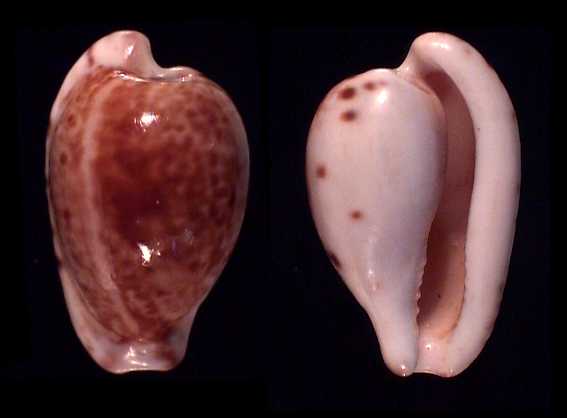 edentula nahoonensis, East London, found beached, lives in depths around 25 m. Typical form. |